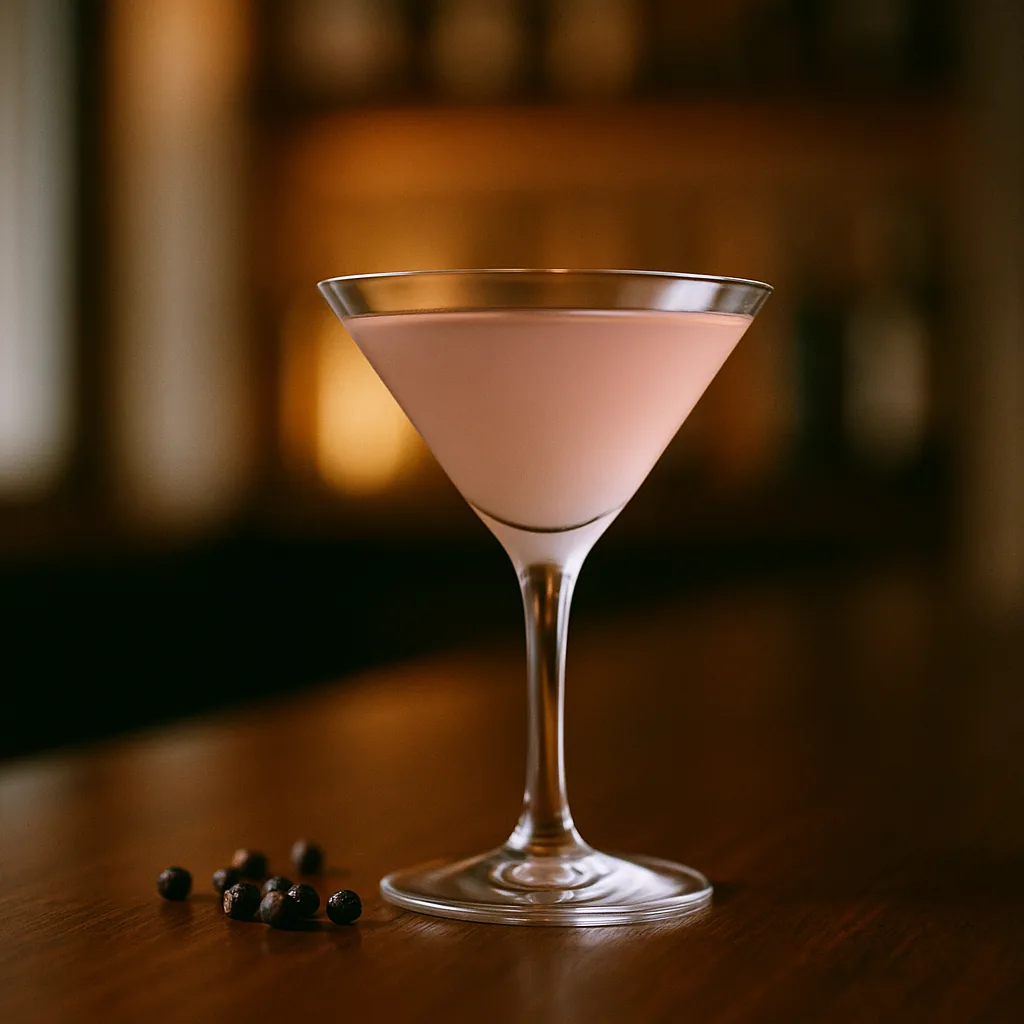
Pink Gin
Gin, cold and nearly neat, with bitters clinging to the glass rather than mixed through it. The aromatic spice sits on top — clove, cinnamon, a dry bitter edge — while the gin carries everything beneath. Nowhere to hide: juniper and weight have to hold the whole drink up.
- 60 ml
- gin
- 4 dashes
- angostura bitters
Glass rinsed with bitters, cold gin poured in, served up.
The drink and how it got here
Another drink that began as a dose. Angostura bitters were made up in 1824 by Dr Johann Gottlieb Benjamin Siegert and taken at sea against sea sickness; the Royal Navy poured Plymouth gin into them to make swallowing the stuff bearable. Two ingredients, and one of them was the medicine.
The Navy brought the habit home. By the 1870s gin was climbing in respectability in England and the better establishments were serving pink gins to people with nothing at all wrong with them — the point of the drink had quietly moved from working to tasting like something.
The measure never really settled. A typical pink gin is gin and a single dash of Angostura, and past that bartenders simply differ. What is fixed is the question you get asked: in or out — whether the bitters swirled round the glass stay in it or get tipped away, leaving only what clung to the sides.
So, three guides. The one with the bitters poured out, driest of the three, which is what this page's own measures follow; the one with them left in and iced water on top, which is how it was actually drunk aboard ship and in the clubs; and the burnt version recorded by Cedric Charles Dickens, great-grandson of the novelist, where the Angostura is set alight before it goes in. One warning: since the 2000s pink gin also means a gin infused with red fruit, which is a bottle, not this drink.
Bitters out
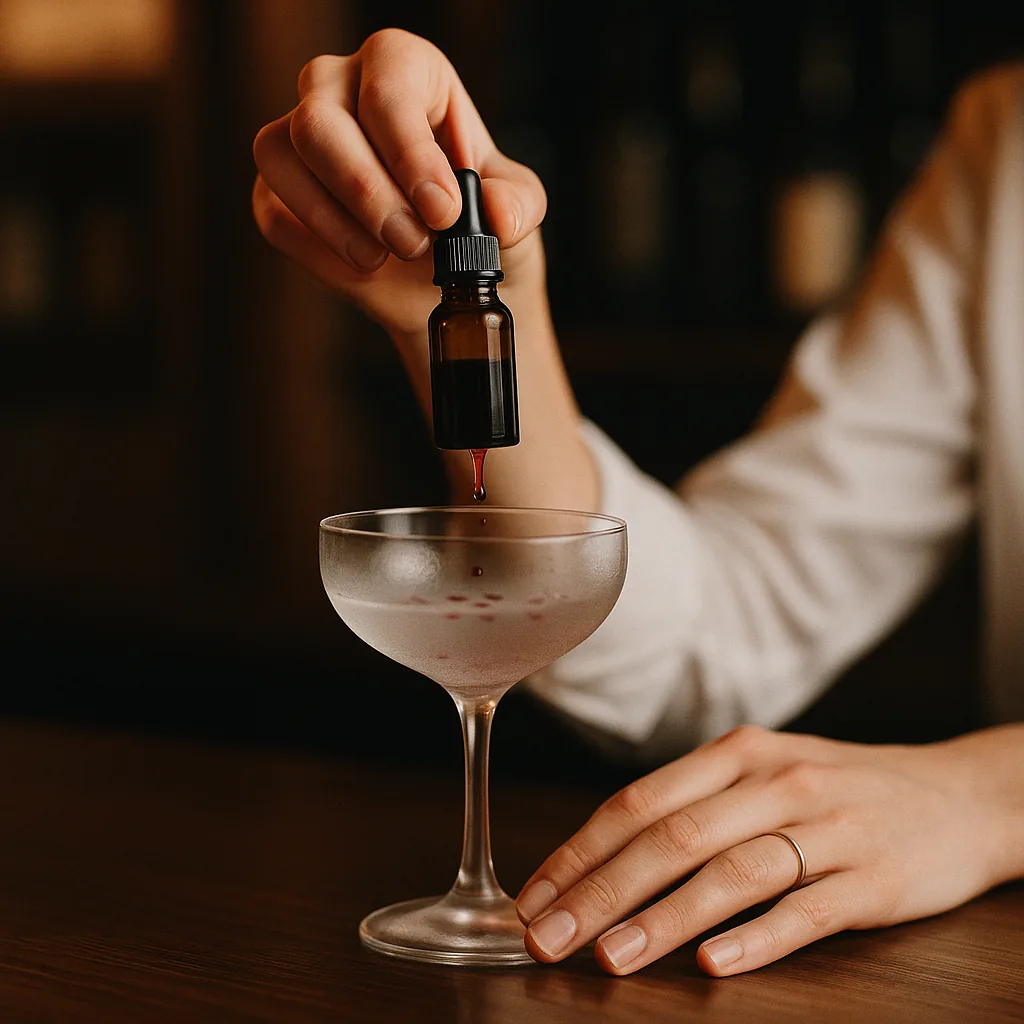
Four dashes of Angostura into the empty glass. This is the entire drink apart from the gin, so put them where you can watch them.
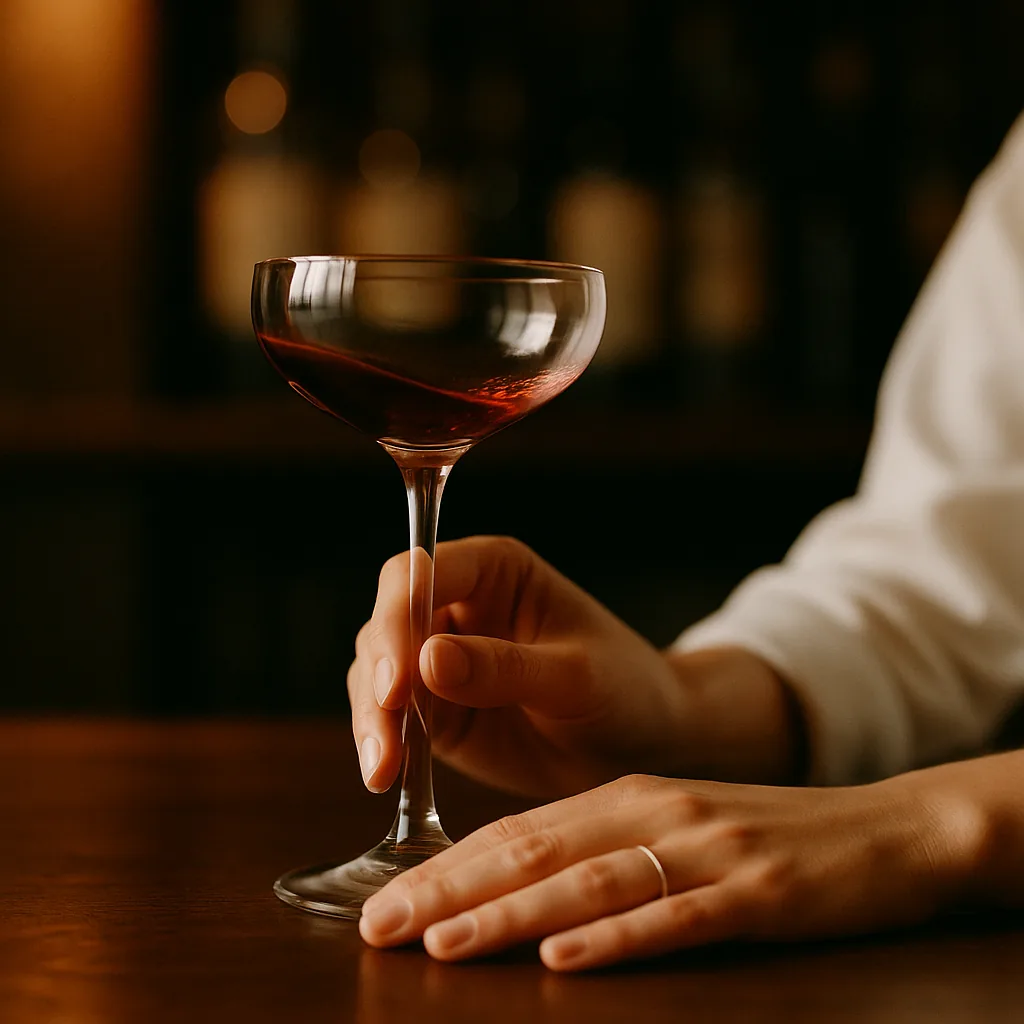
Roll it round the whole inside of the bowl. You are coating a glass here, not mixing a drink.
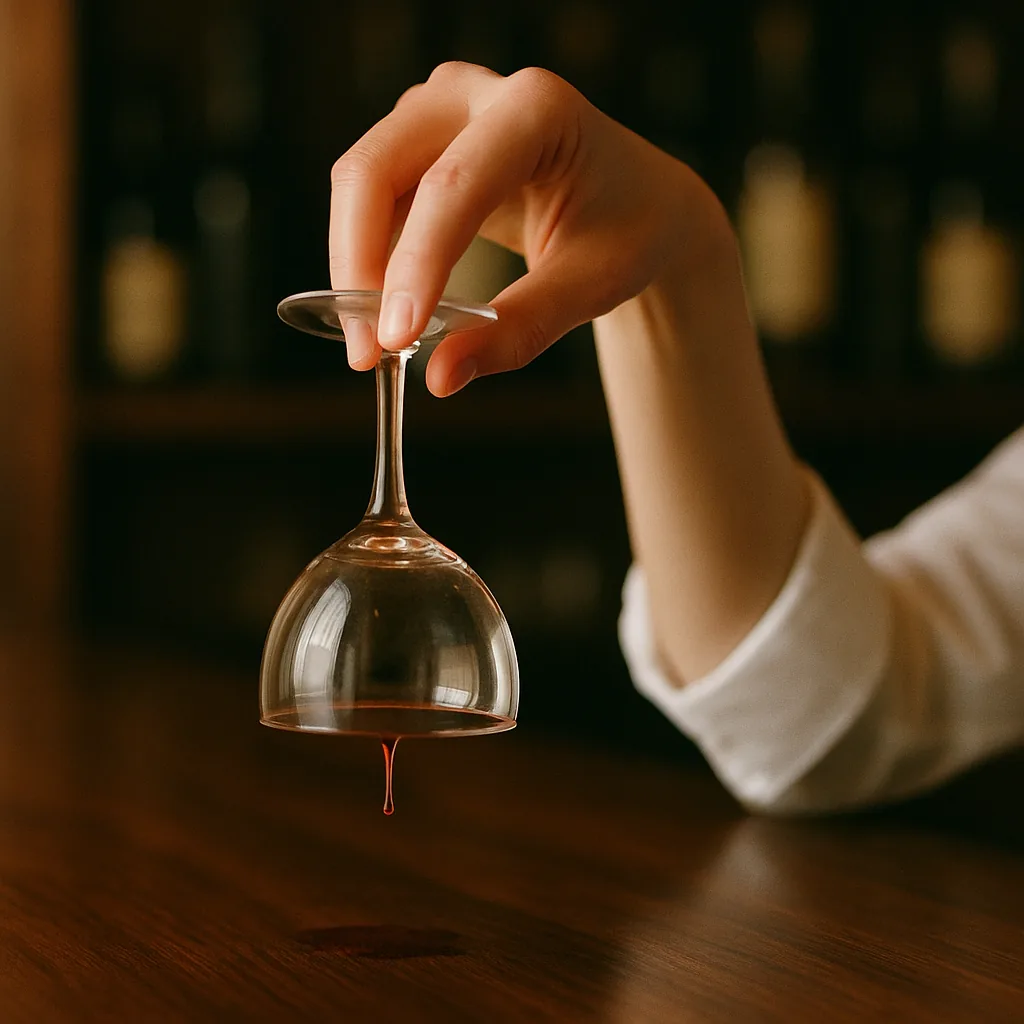
Then tip it out. Out, in the bartender's question — what stays on the glass is all the bitterness this one gets.
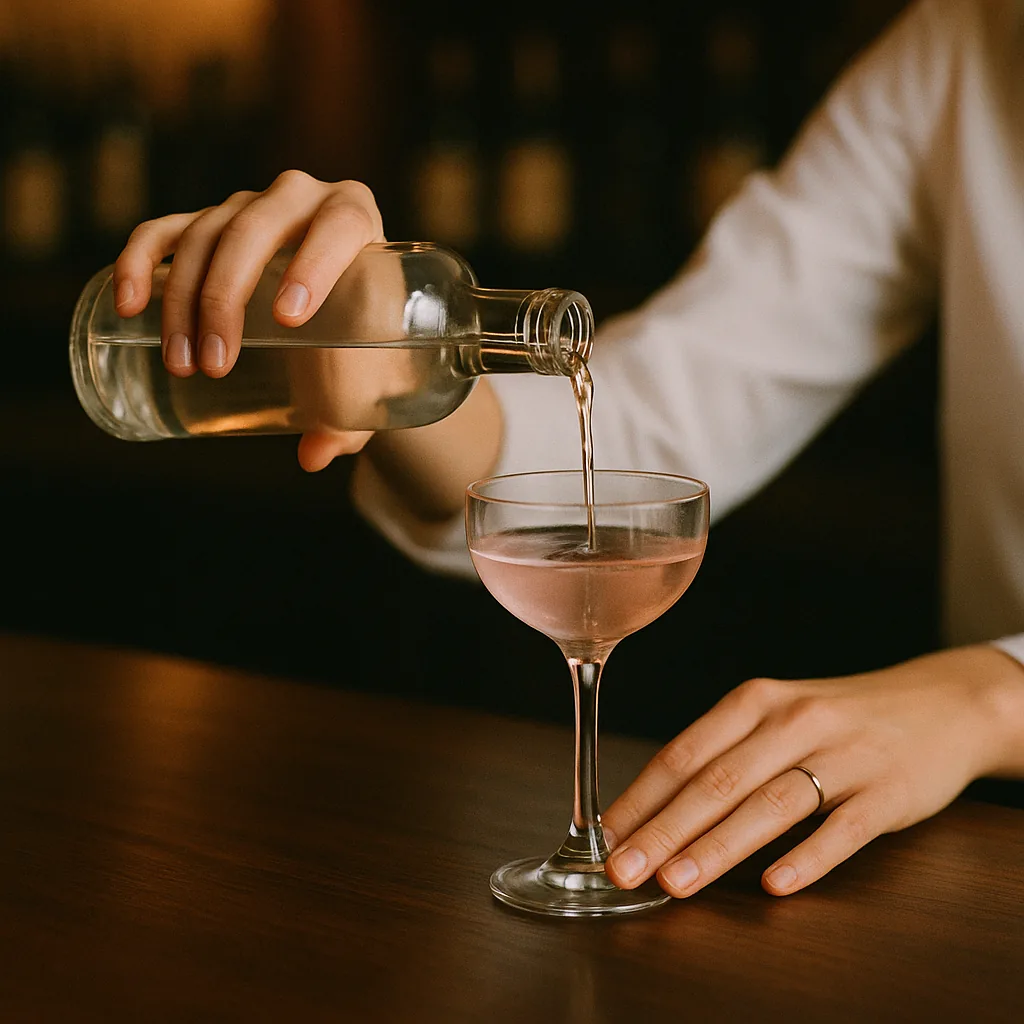
Sixty of gin, straight from the freezer. Nearly neat spirit — this has to be a bottle you actually like.
Bitters in, topped with water
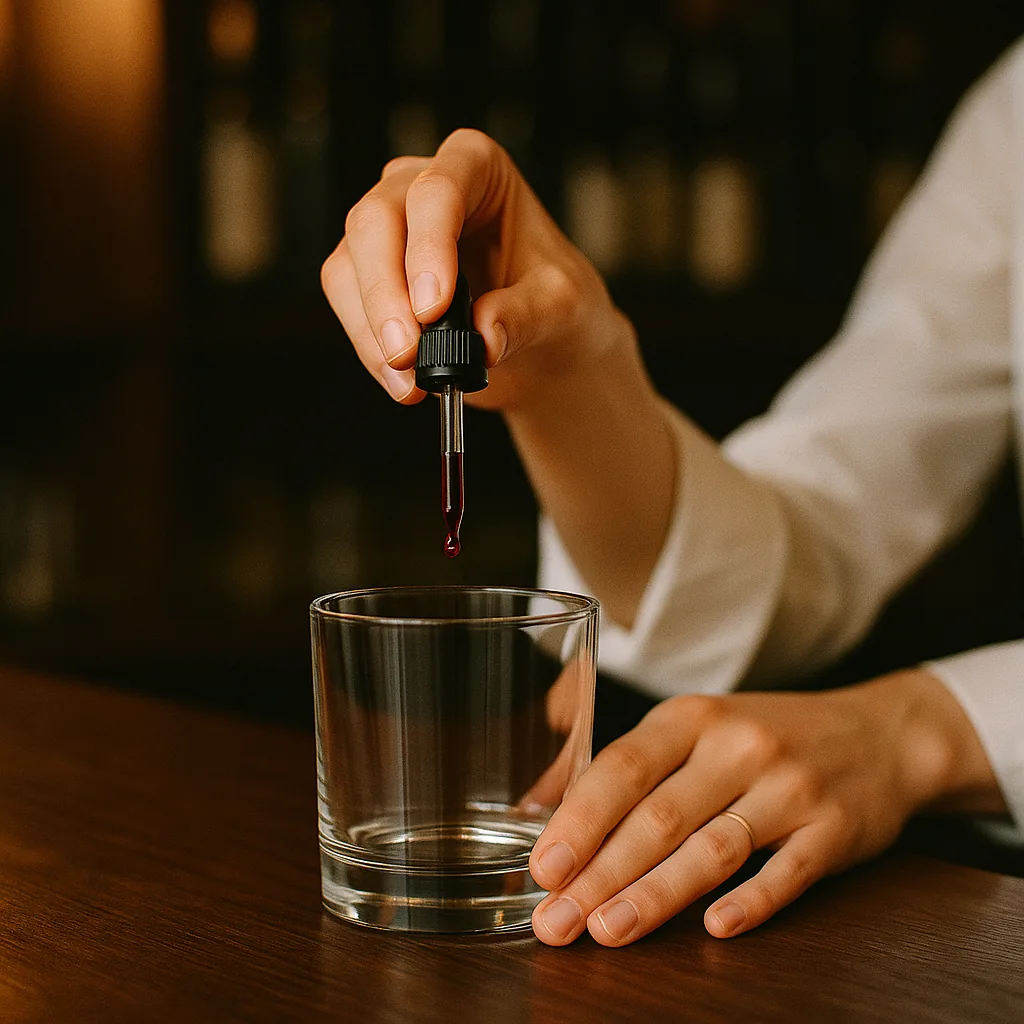
Bitters first again, and this time they are staying put. In, to the same question.
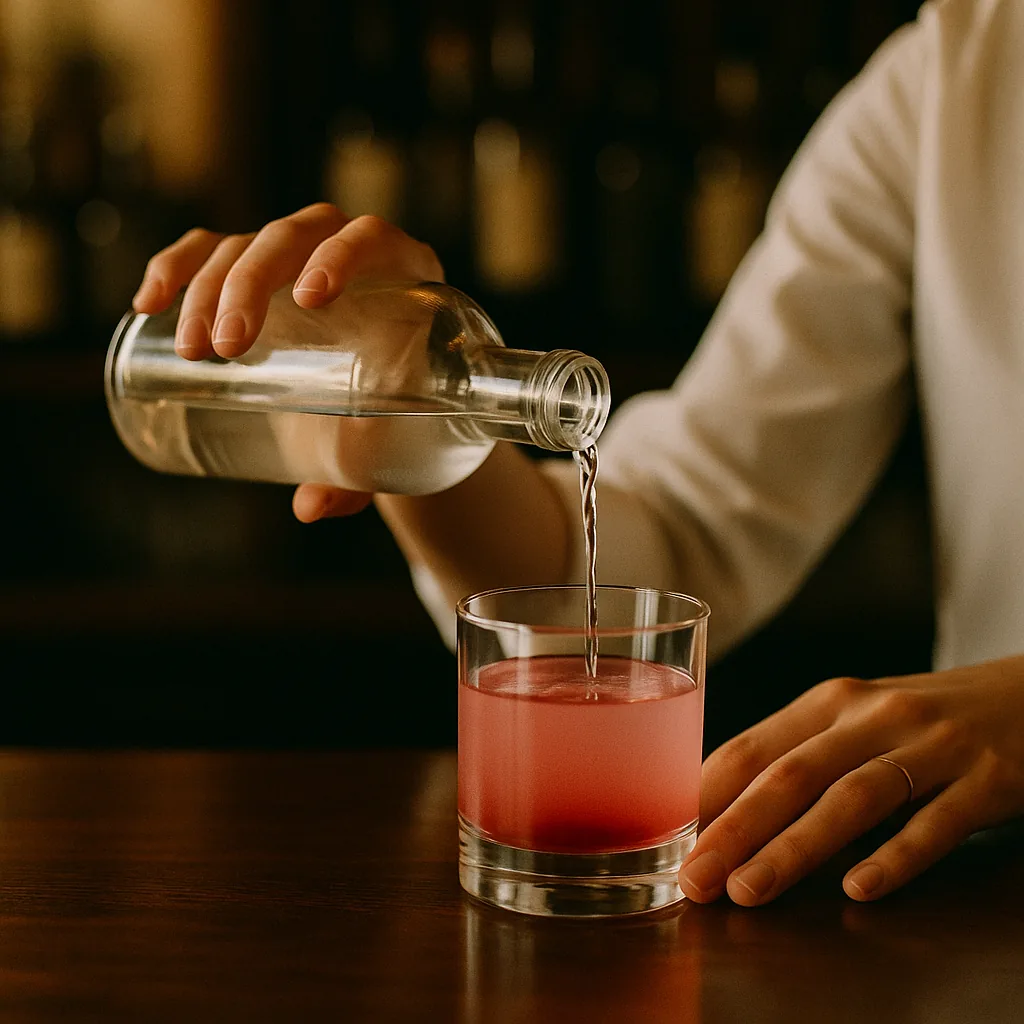
Gin on top, and the colour comes up through the whole glass instead of clinging to the walls. Same two things, twice the bitterness.
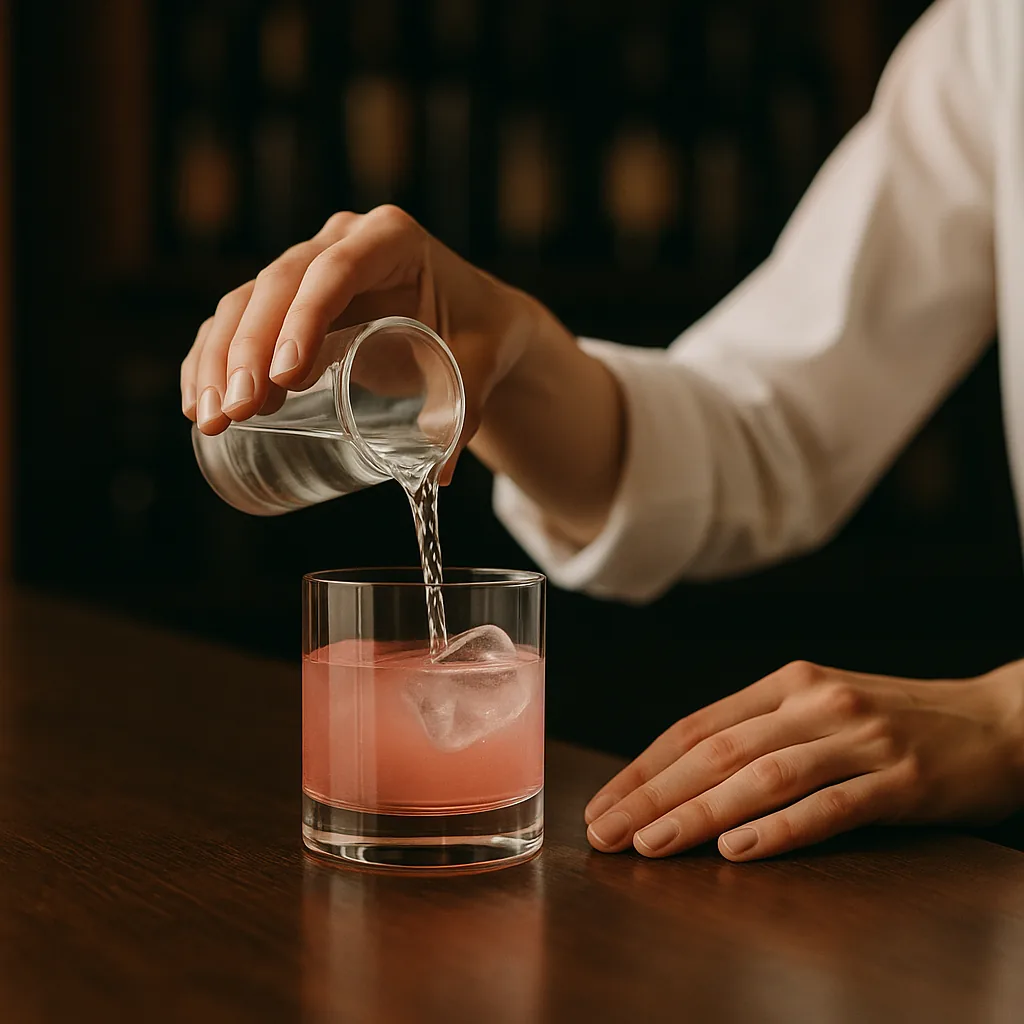
Top it with iced water. That is the naval way, and it is why anyone could drink these all evening and still stand up.
Burnt pink gin
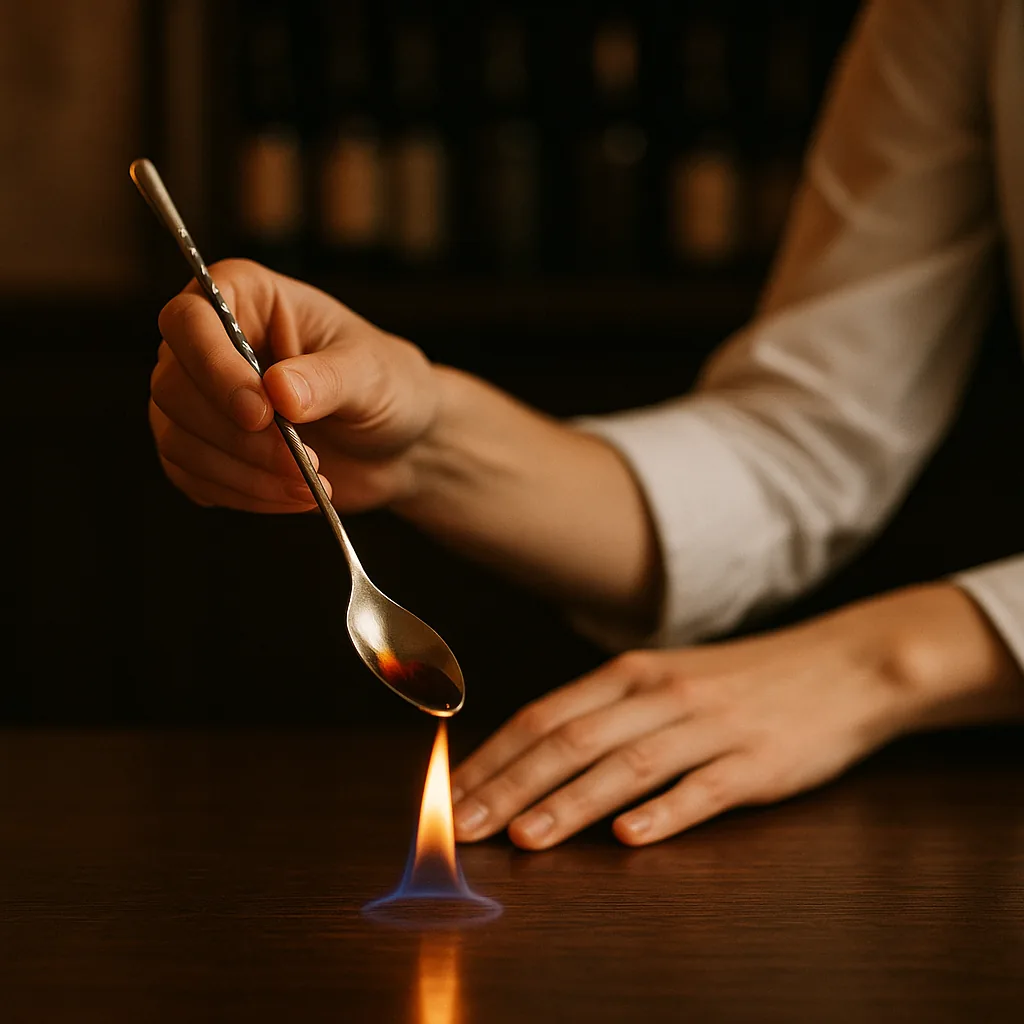
A teaspoon of Angostura, set alight. Burning it takes the sharp edge off and leaves the spice standing.
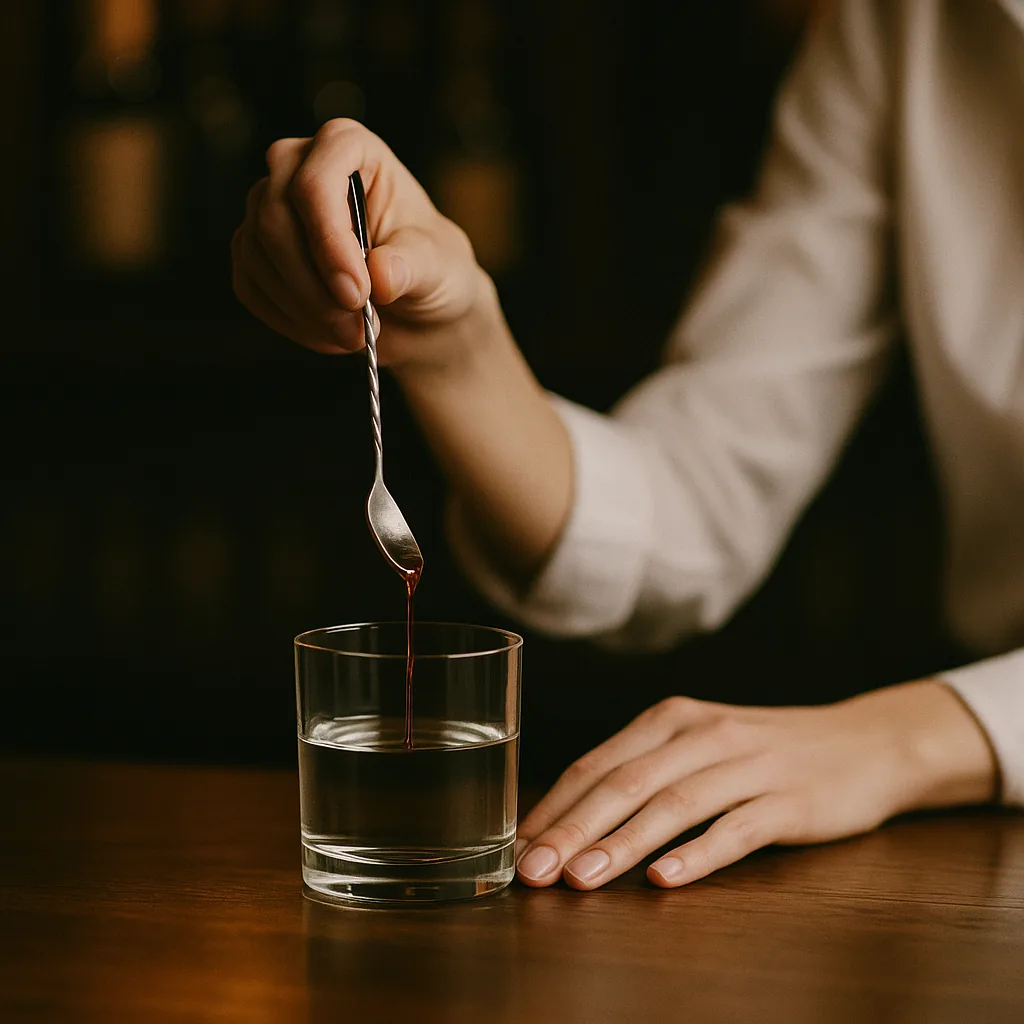
Straight into a large measure of dry gin. Quick and careful — this is the one step on this whole site that can go wrong loudly.
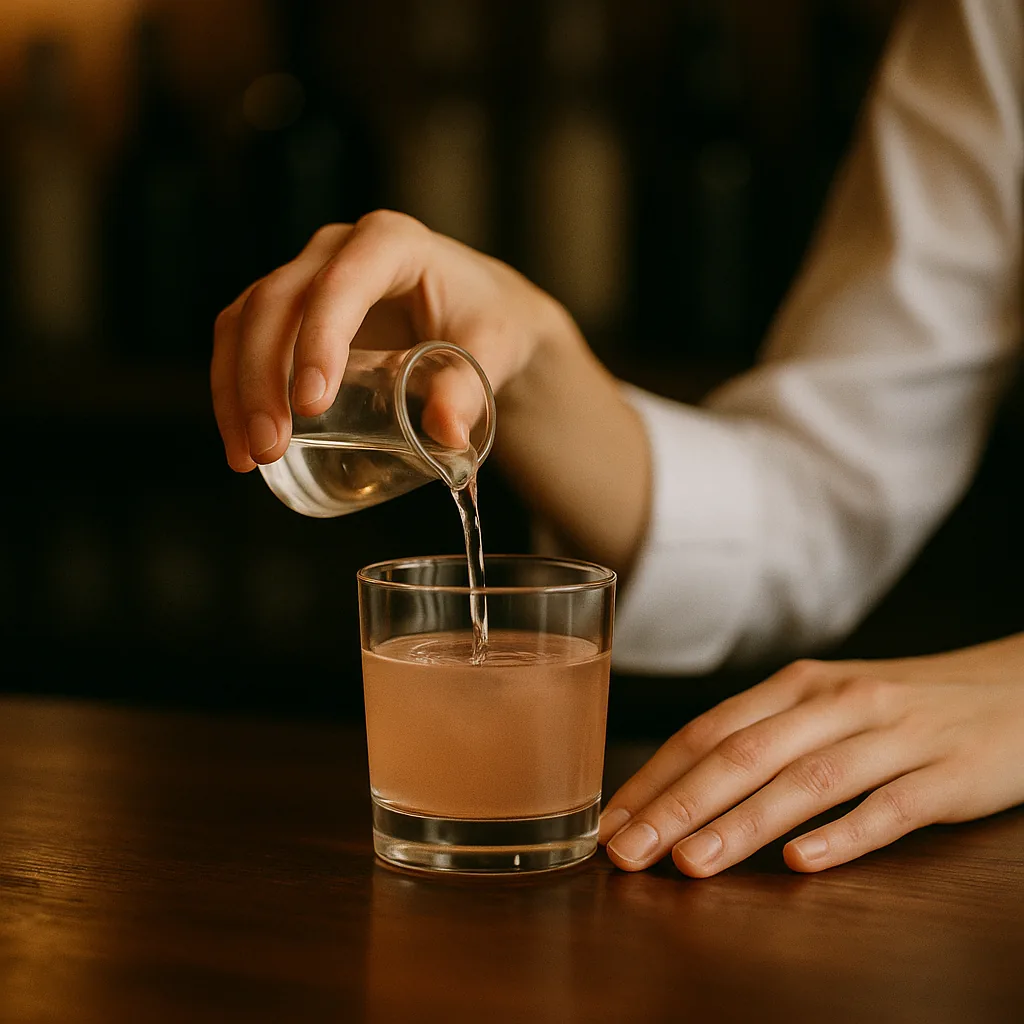
Cold water to taste, and done. Warmer and rounder than the other two, with the clove and cinnamon pushed right to the front.
From the collection — 1 bottle
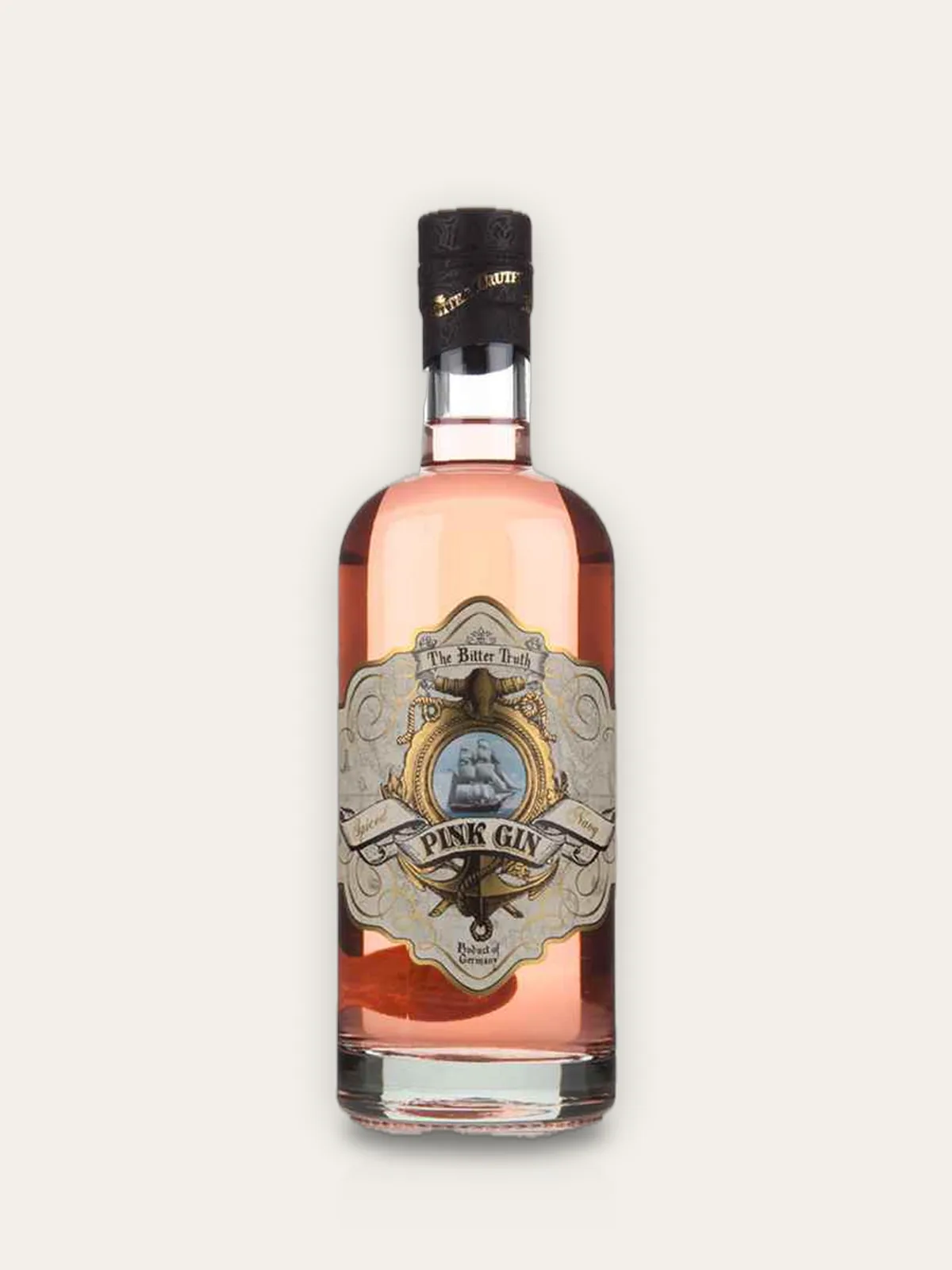
The Bitter Truth
Pink Gin
The bottle is built around the bitters-and-gin idea, so it makes the drink it's named for without reaching for a dasher bottle.