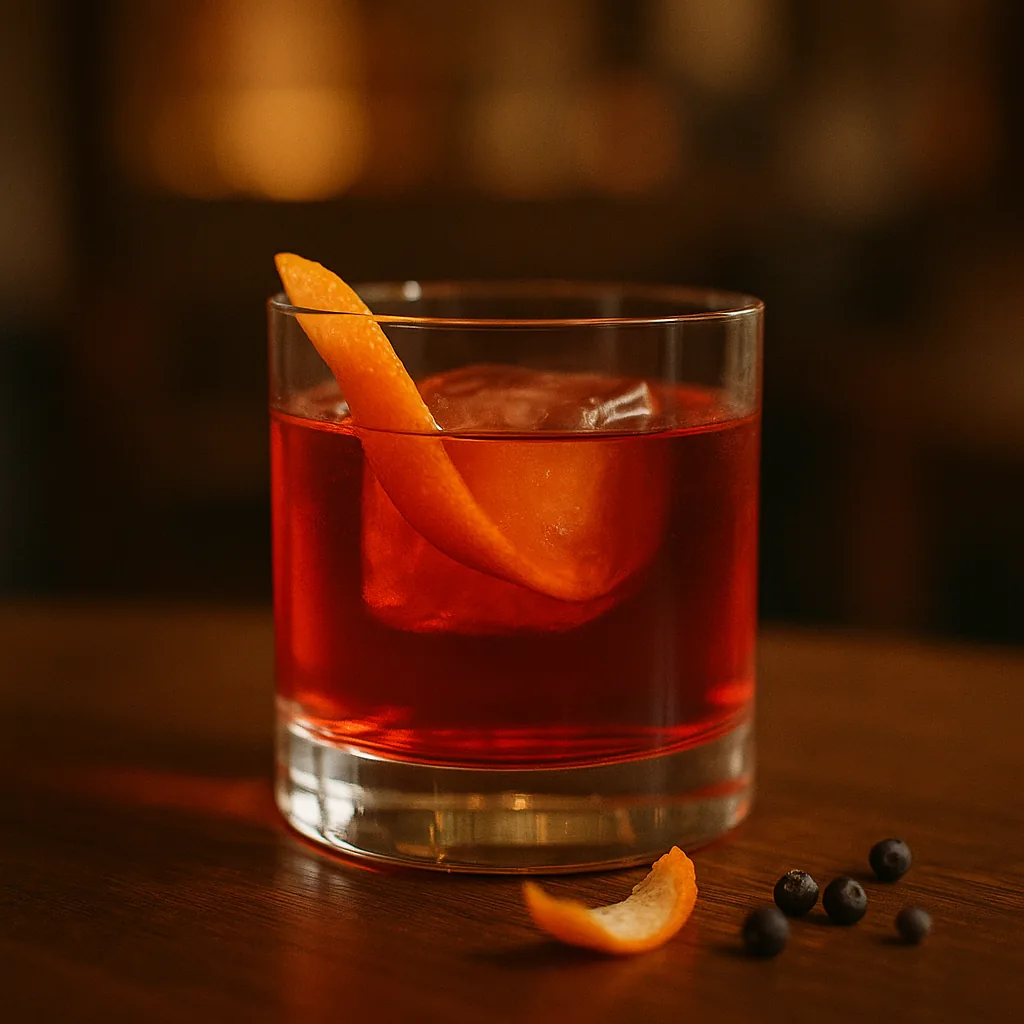
Negroni
Bitter first, then sweet: Campari's rind-and-root edge held up by the vermouth's dark, herbal sugar. The gin has to push through both, so juniper and a firm backbone read clearly where softer florals get buried. Stirred over ice, it drinks cold and slow, the orange peel lifting the bitterness.
- 30 ml
- gin
- 30 ml
- campari
- 30 ml
- sweet vermouth
- orange
Equal parts, stirred over ice, orange peel.
The drink and how it got here
Before the Negroni there was the Americano: sweet vermouth and Campari in equal measure, lengthened with soda. Italy had been drinking it since the 1800s under the name Milano-Torino — the bitter came from Milan, the vermouth from Turin — and it is the drink this one is built on top of.
The account most often repeated puts the change in Florence around 1919, at Caffe Casoni on Via de' Tornabuoni. Count Camillo Negroni asked the bartender, Fosco Scarselli, to stiffen his Americano with gin instead of soda. Scarselli also swapped the usual lemon garnish for orange. It was ordered as an Americano in the style of Count Negroni until the first half of that dropped away.
There is a rival claim, and it is worth stating precisely because it fails: descendants of Pascal Olivier de Negroni say he invented the drink in Senegal in 1857. Campari did not exist until 1860. A dated claim that collapses on its own arithmetic is the clearest available demonstration of how thin cocktail provenance usually is.
In print the drink moved a great deal more than its proportions did. Its earliest known equal-parts attestation, in 1929, is shaken, finished with lemon, and not called a Negroni at all. By 1953 it is stirred, strained and served with no ice in the glass. The IBA today builds it over ice and finishes it with orange. Three procedures, one recipe — which is why the guides below are three and not one.
Built in the glass
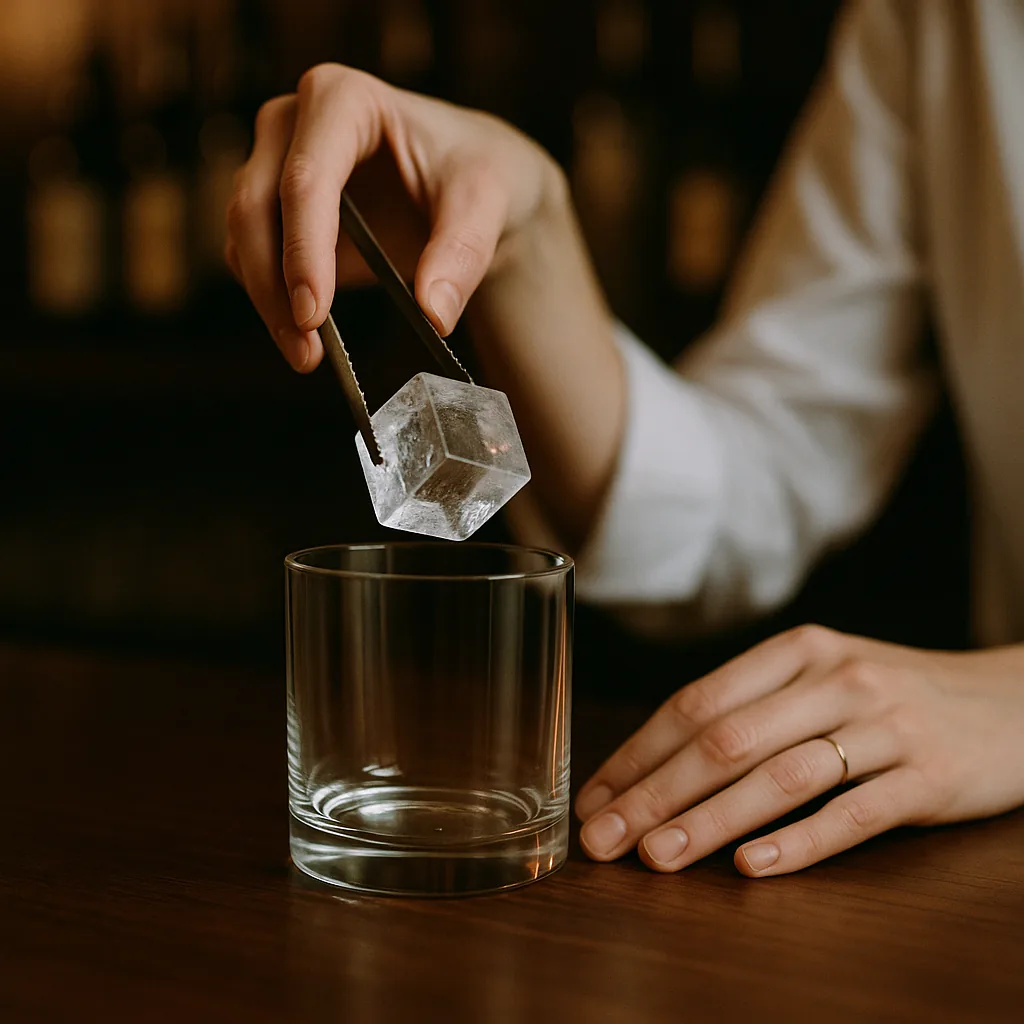
One big cube, not four small ones. Less surface means a slower melt, so it stays cold without going watery.
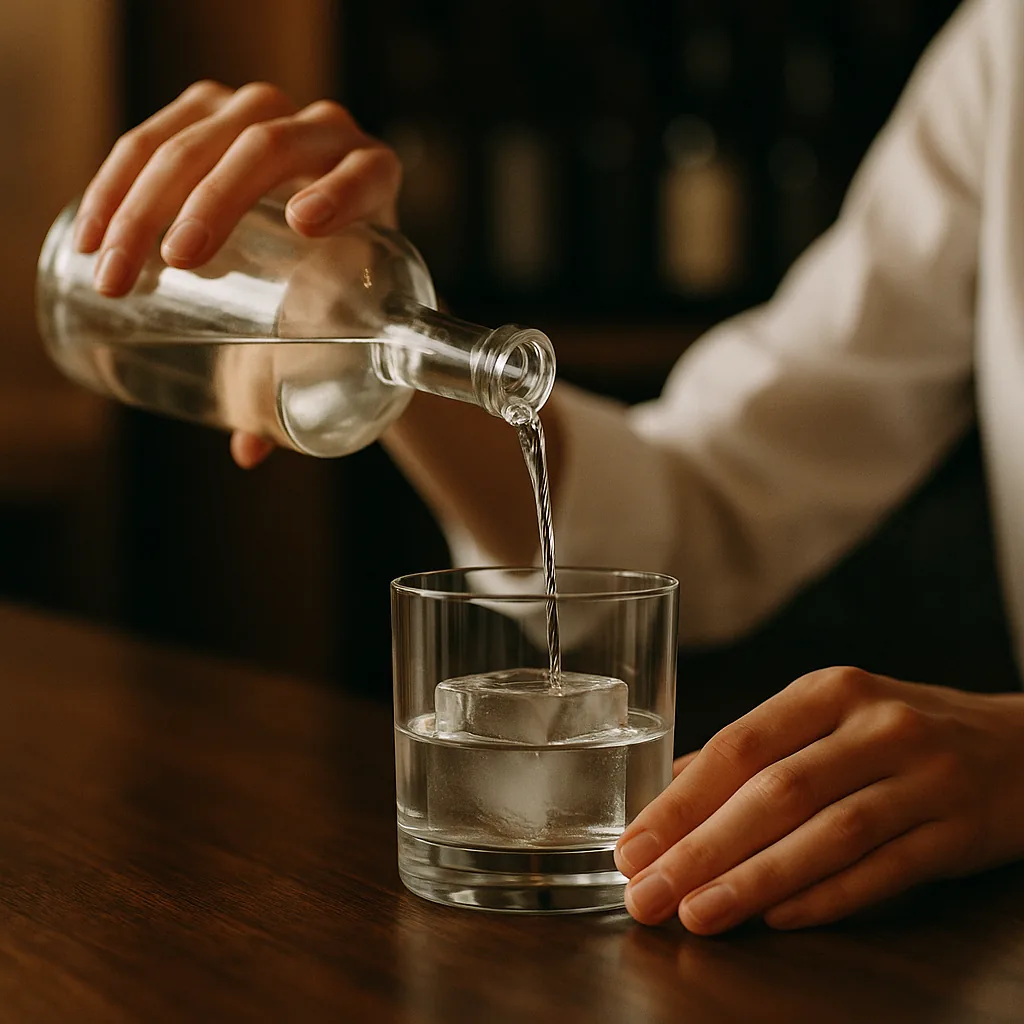
Gin first, 30 ml. Highest strength goes in at the bottom so everything after it has something to fall through.
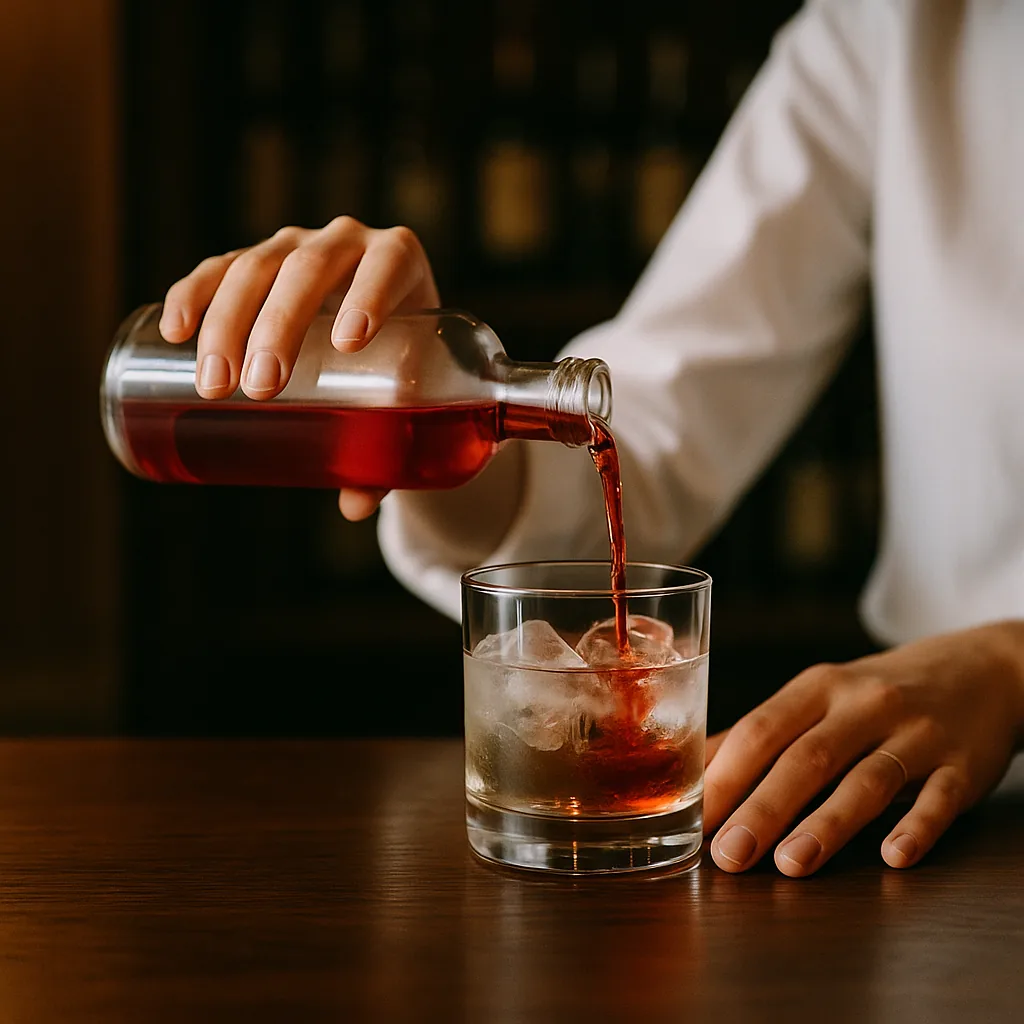
Campari next, the same 30 ml. This is where the bitterness comes from, and the colour with it.
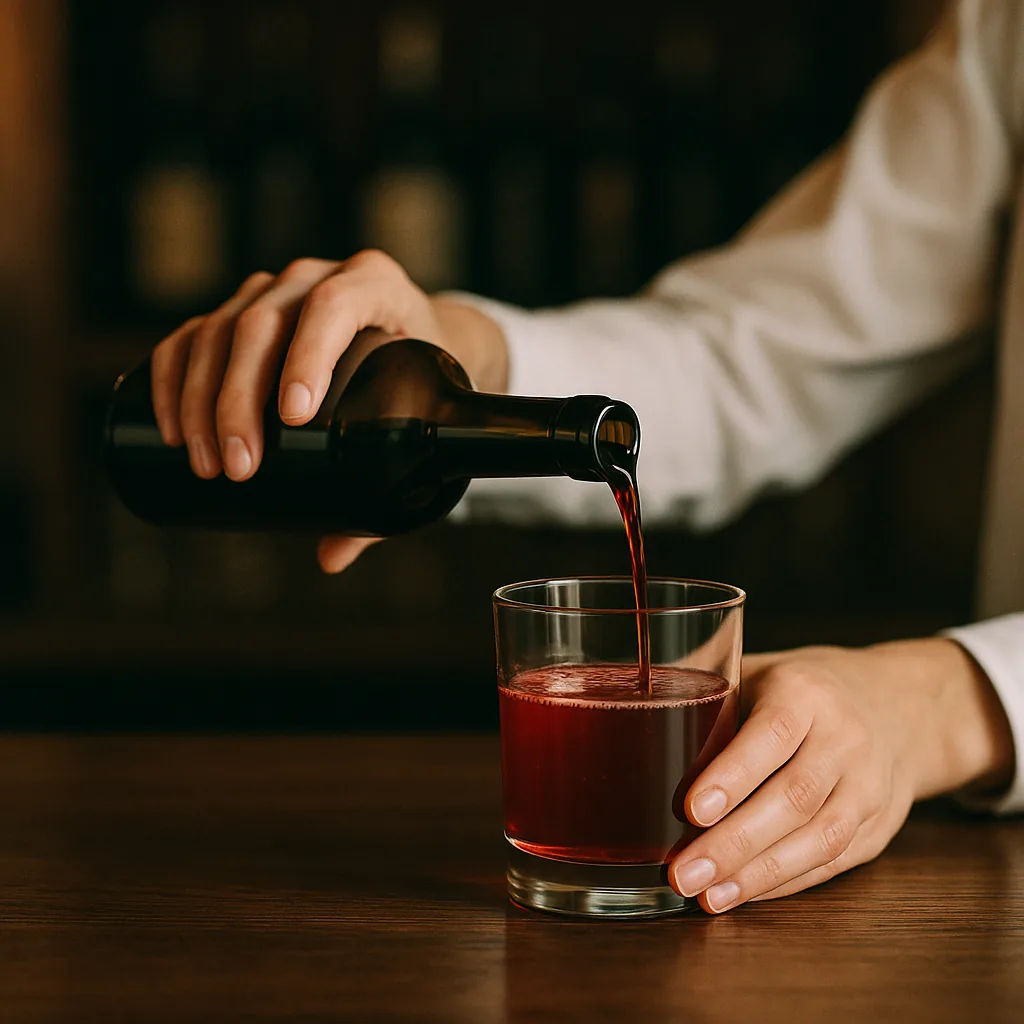
Sweet vermouth, 30 ml again. Equal parts — that is the entire recipe, and it is why you can build one from memory.
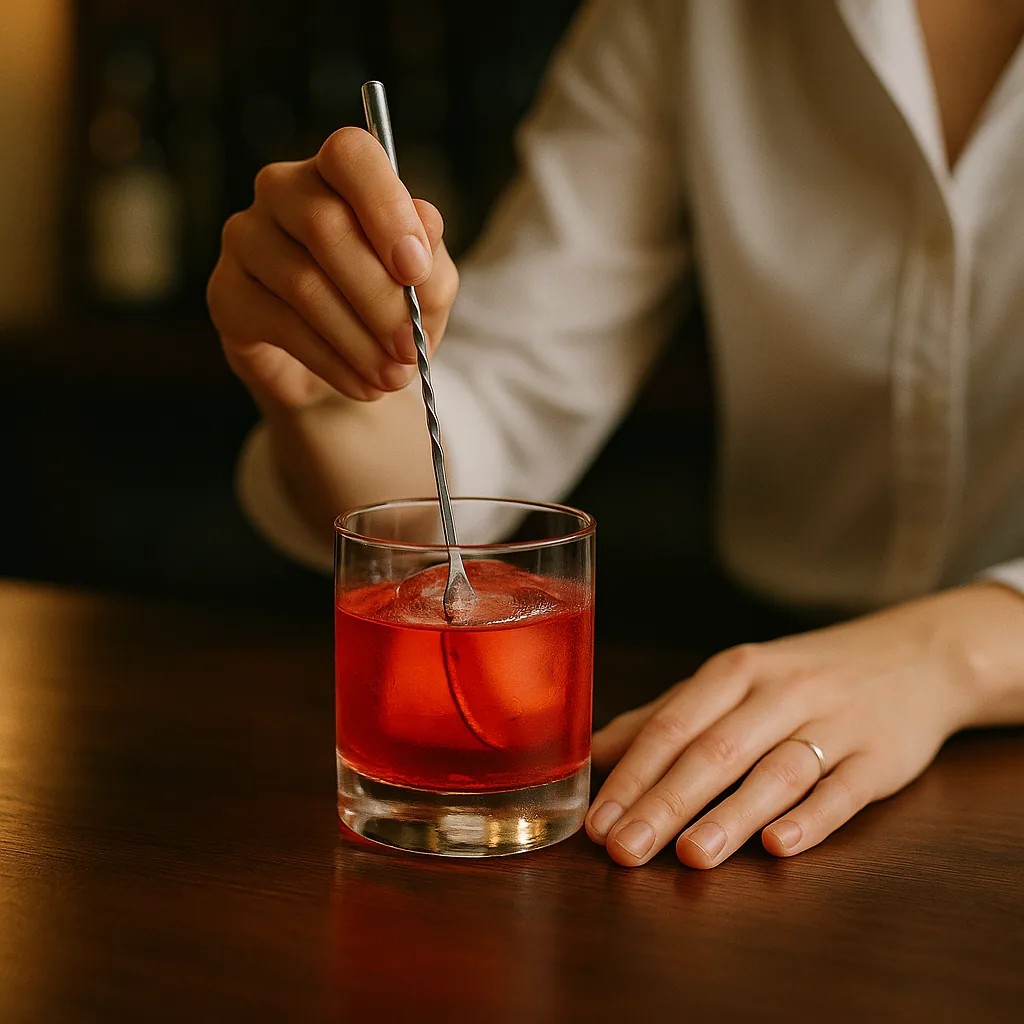
Stir, do not shake. You are chilling it and adding a little water at the same time — about fifteen seconds, until the glass frosts.
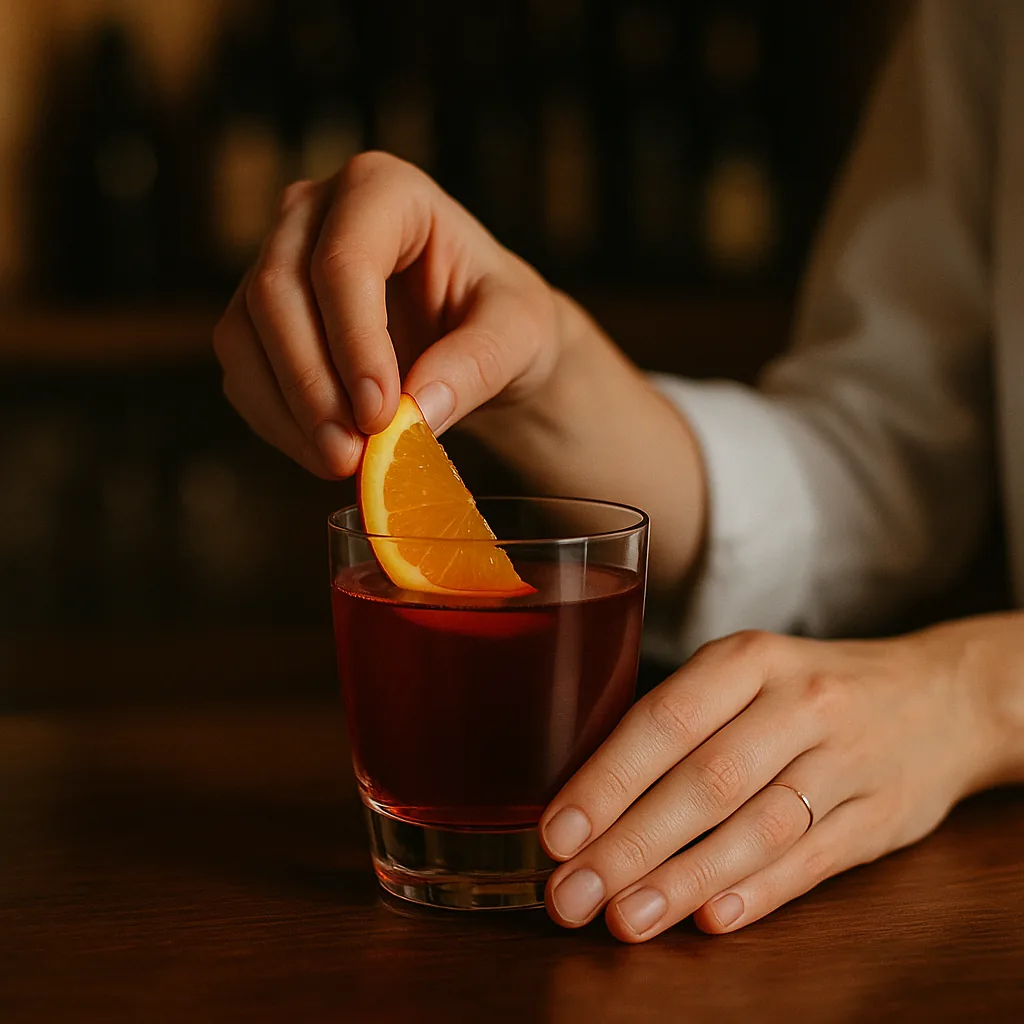
Half a slice of orange. The oil off the peel is what lifts the bitterness on the first sip.
Stirred, strained, served up
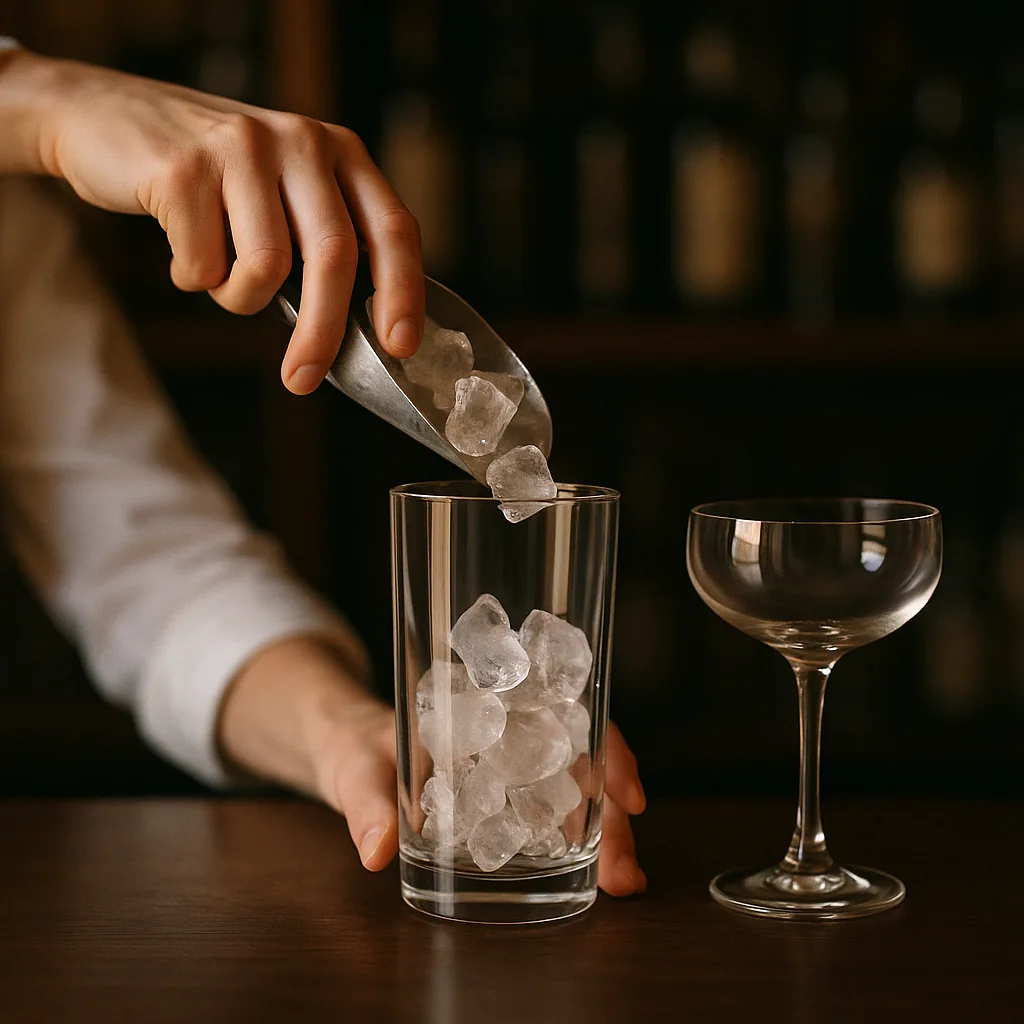
Nothing goes into the serving glass but the drink. This one gets chilled in the mixing glass and then strained away from the ice.
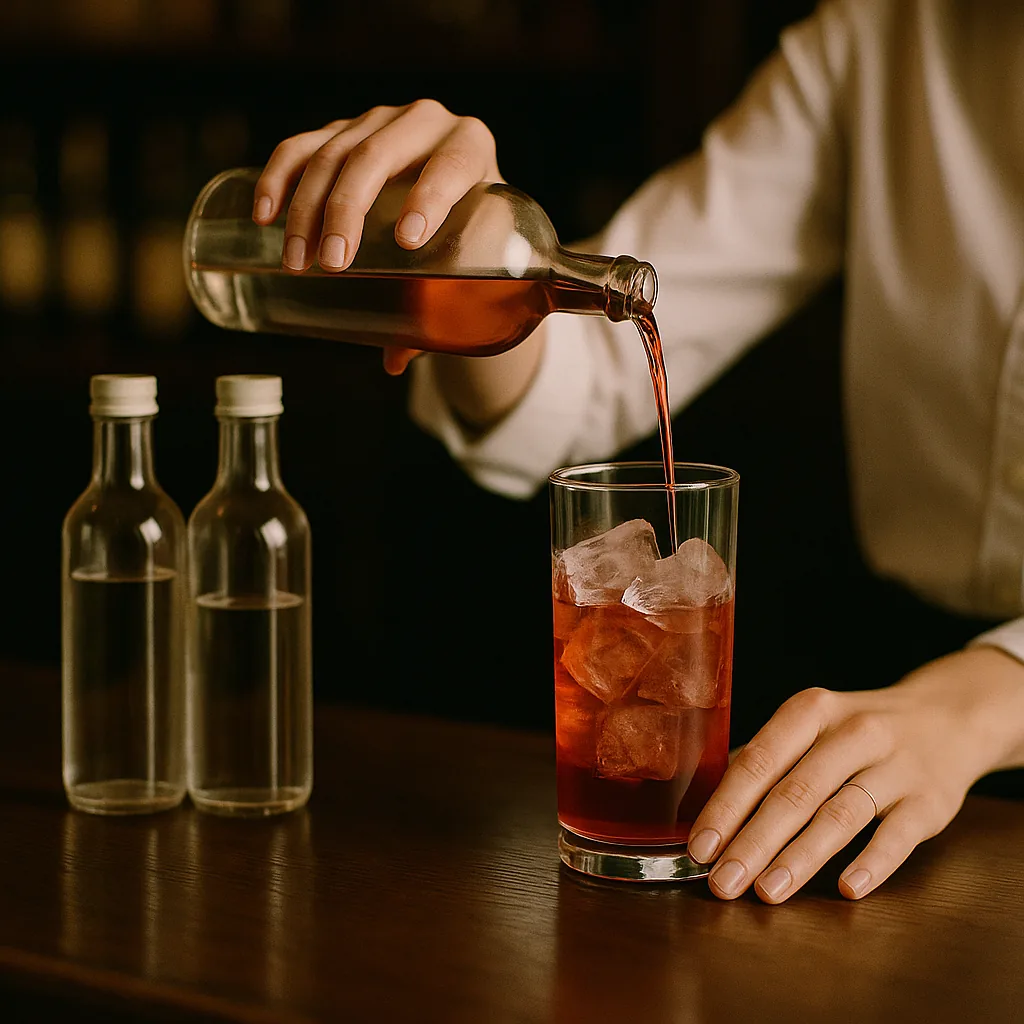
A third gin, a third sweet vermouth, a third Campari. The same equal parts — the proportions have never moved.
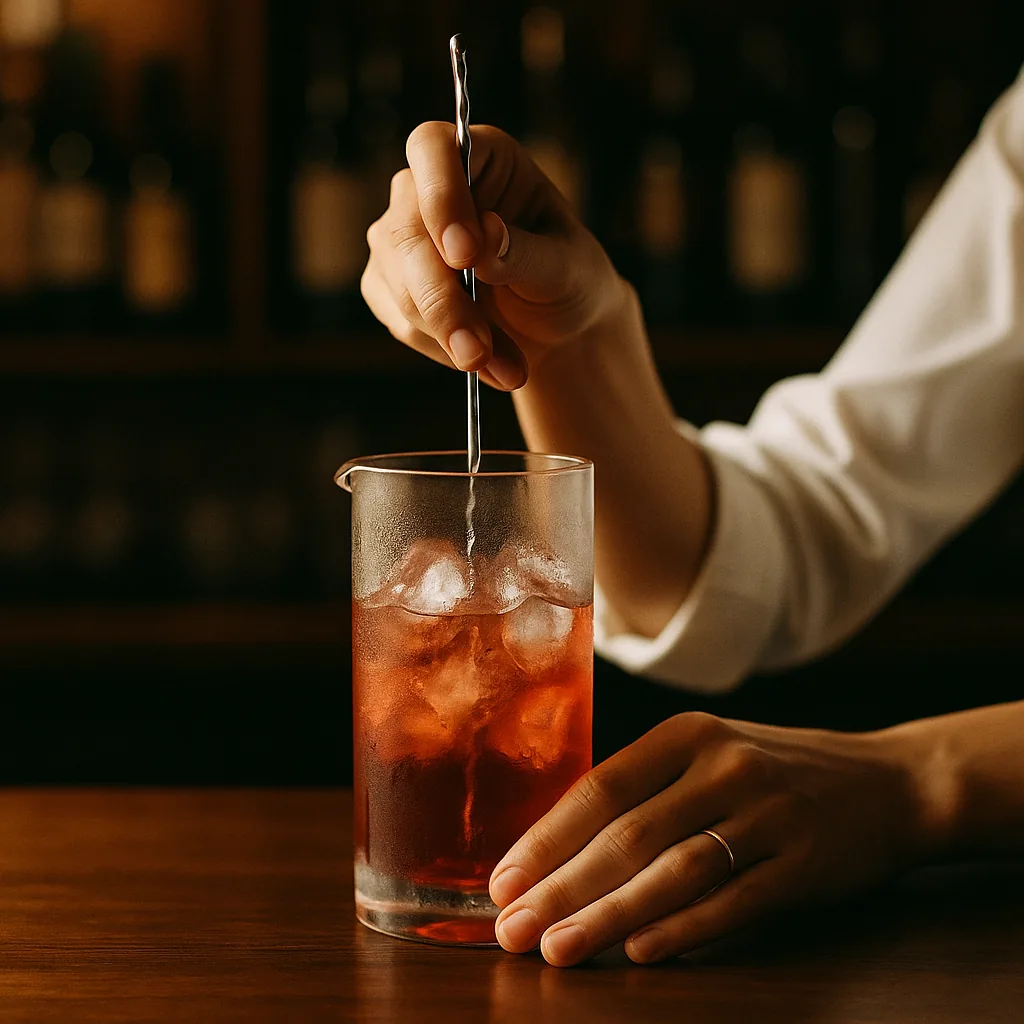
Stir it longer than feels right. There will be no ice in front of you, so all the dilution has to happen here or not at all.
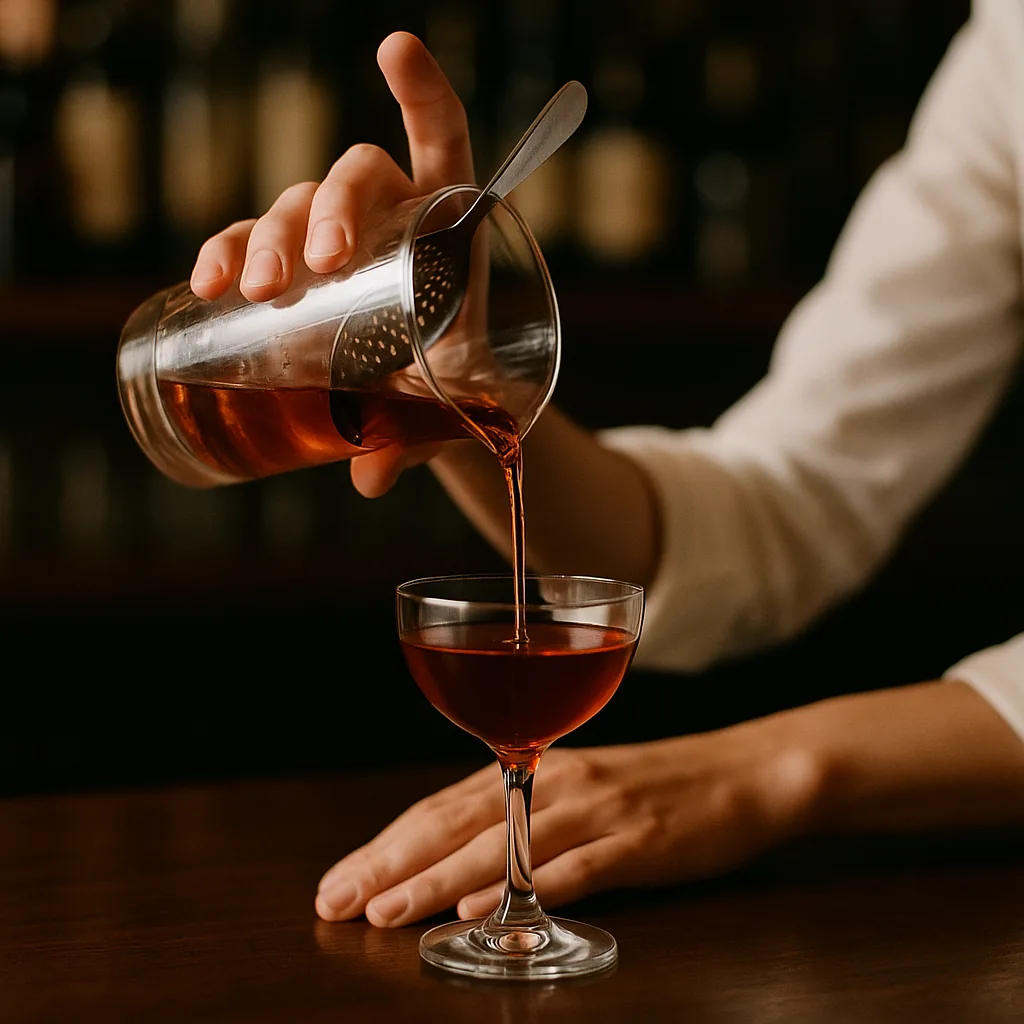
Strain it off the ice. What lands in the glass is all the drink is ever going to be.
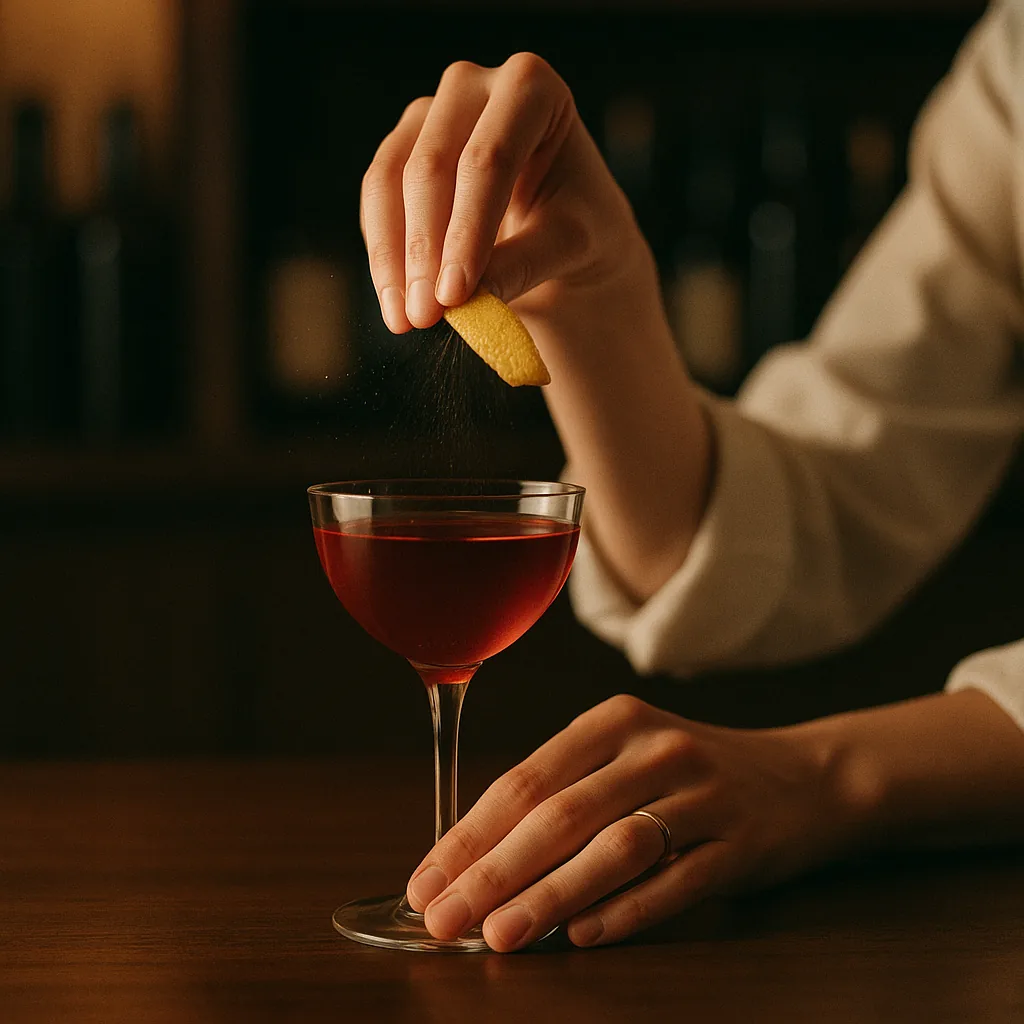
Lemon, not orange — that is how it was written down in 1953. Sharper on the nose, and it drinks drier.
Shaken, as first printed
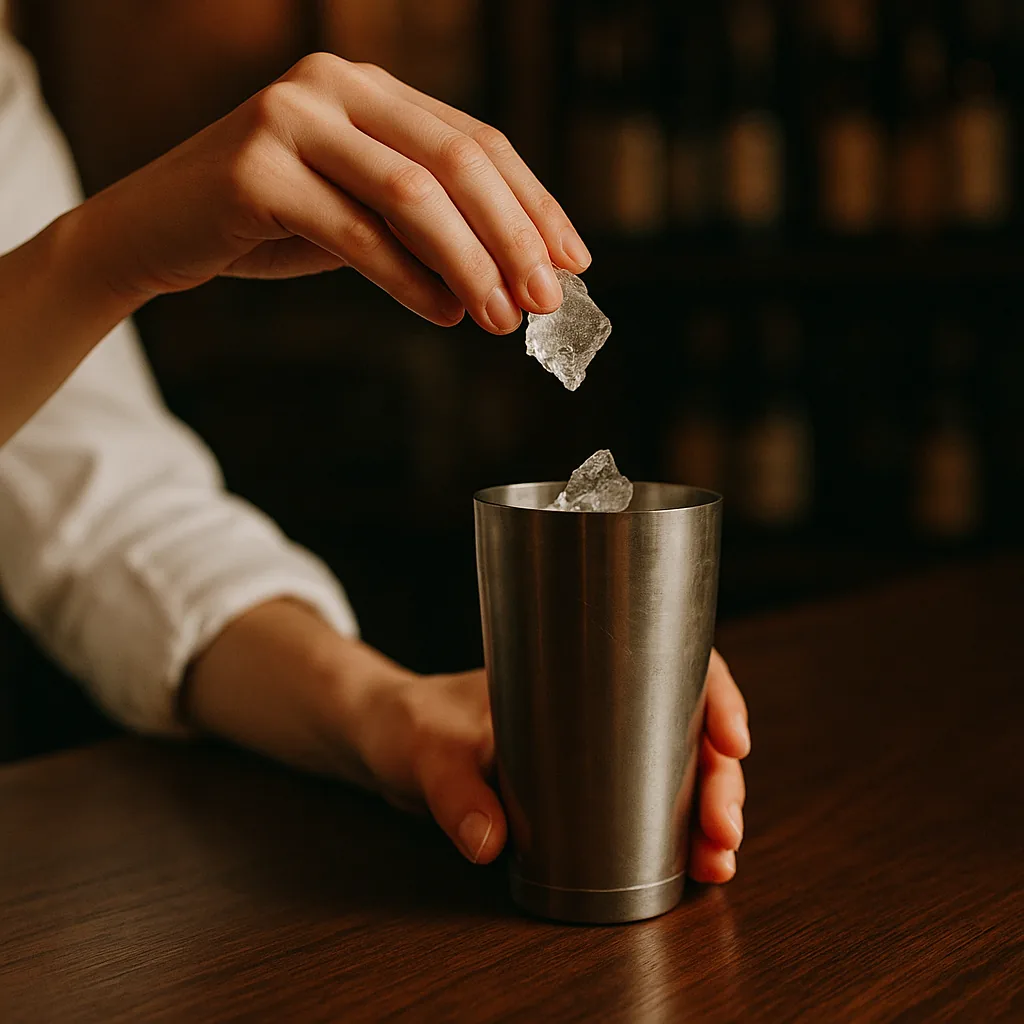
Broken ice, the way the book has it. It chills faster and waters the drink more, and both of those are the point.
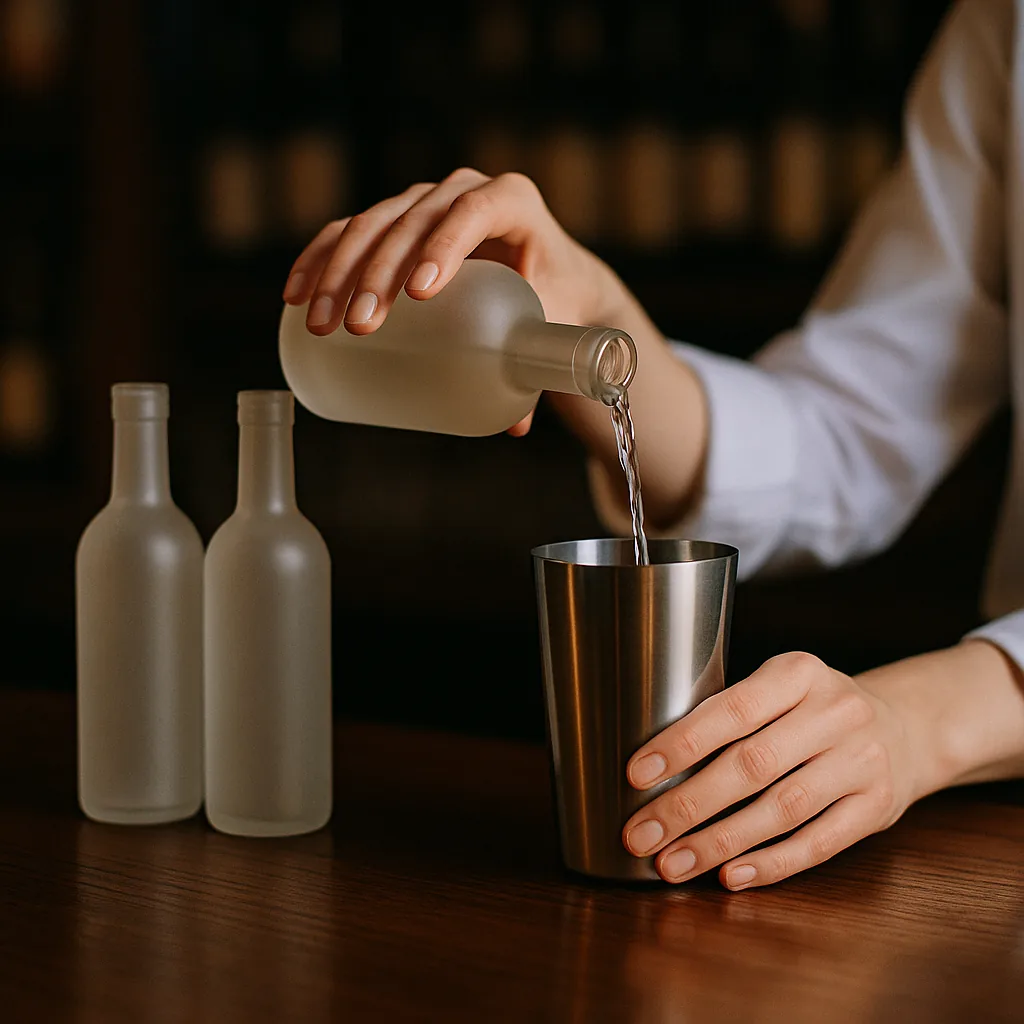
Equal thirds again. This recipe is older than the name — in 1929 it was printed as Campari Mixte, and nobody had called it a Negroni yet.
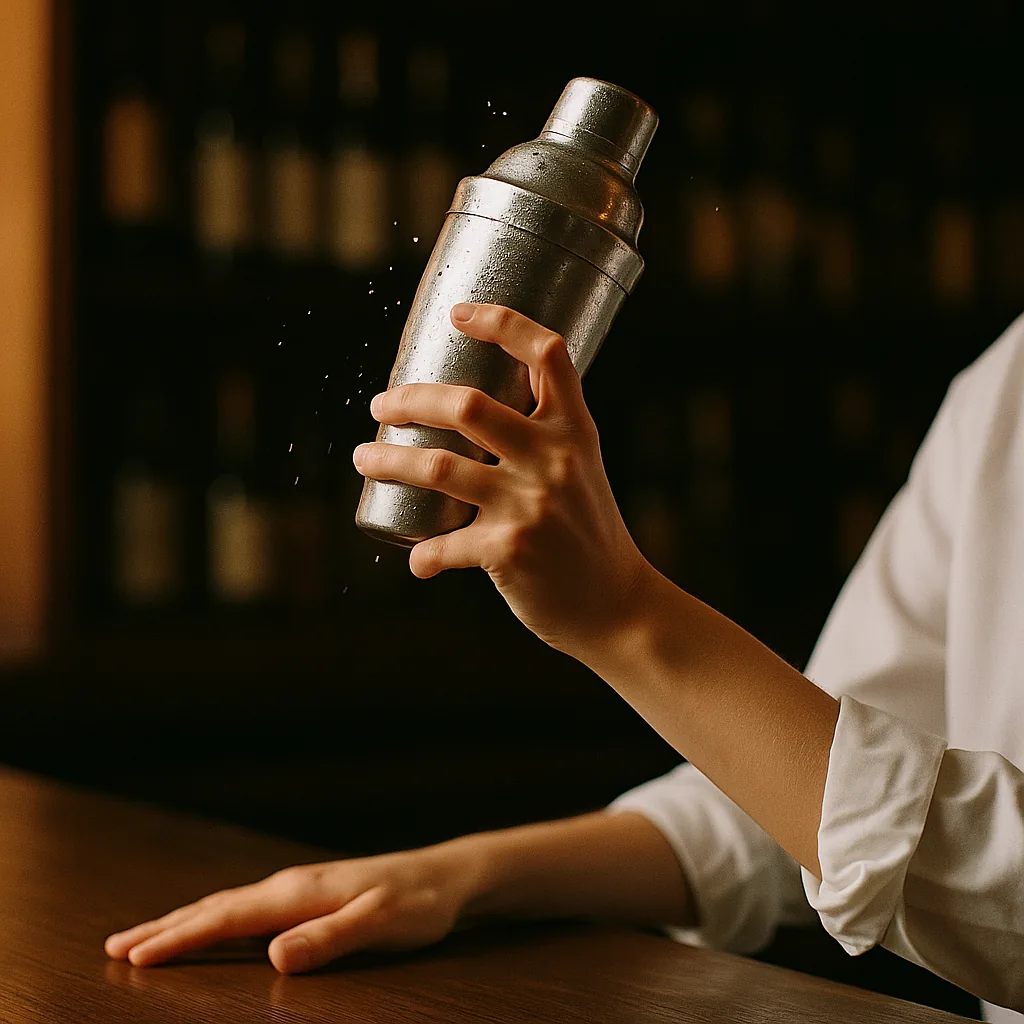
Shake it properly. This is the step that later disappeared, and it is why the drink used to arrive cloudy.
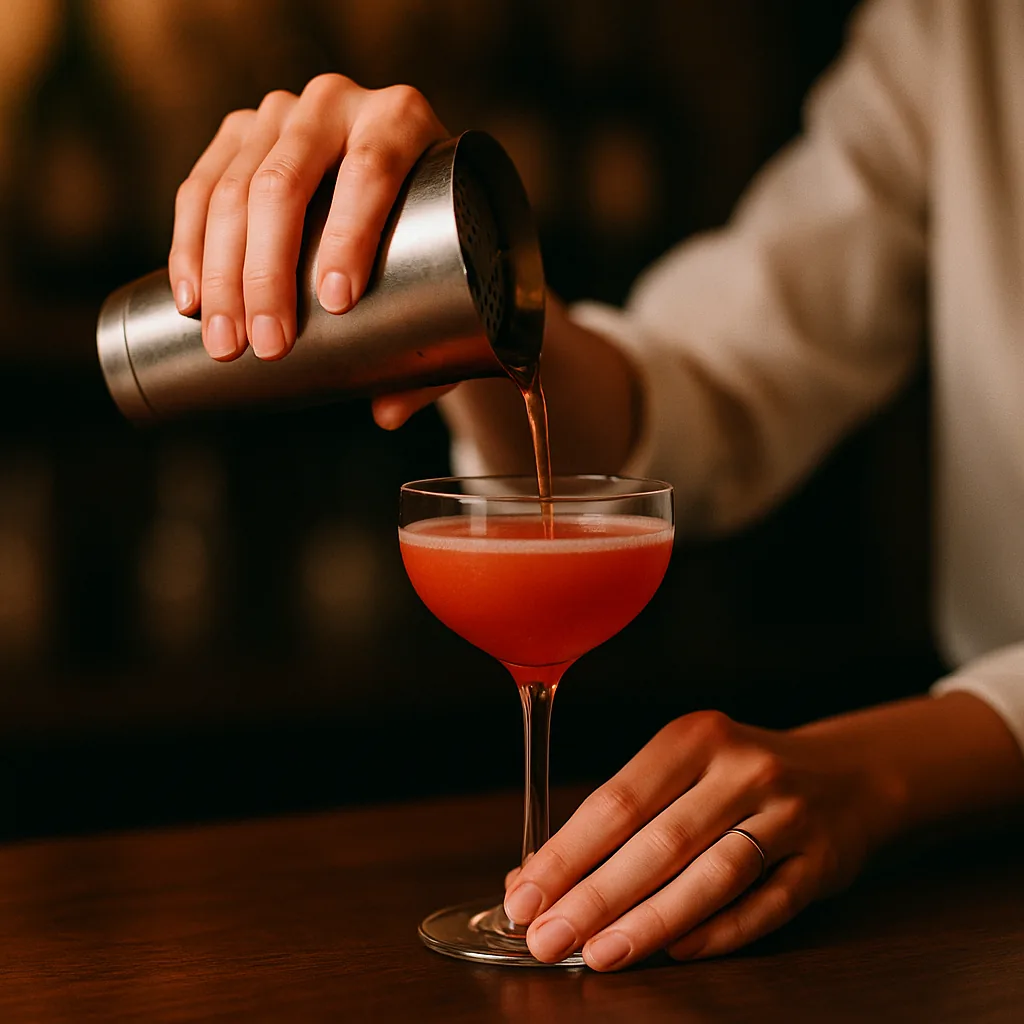
Cloudy, aerated, lighter in the mouth. Not wrong — just an older idea of what this drink was for.
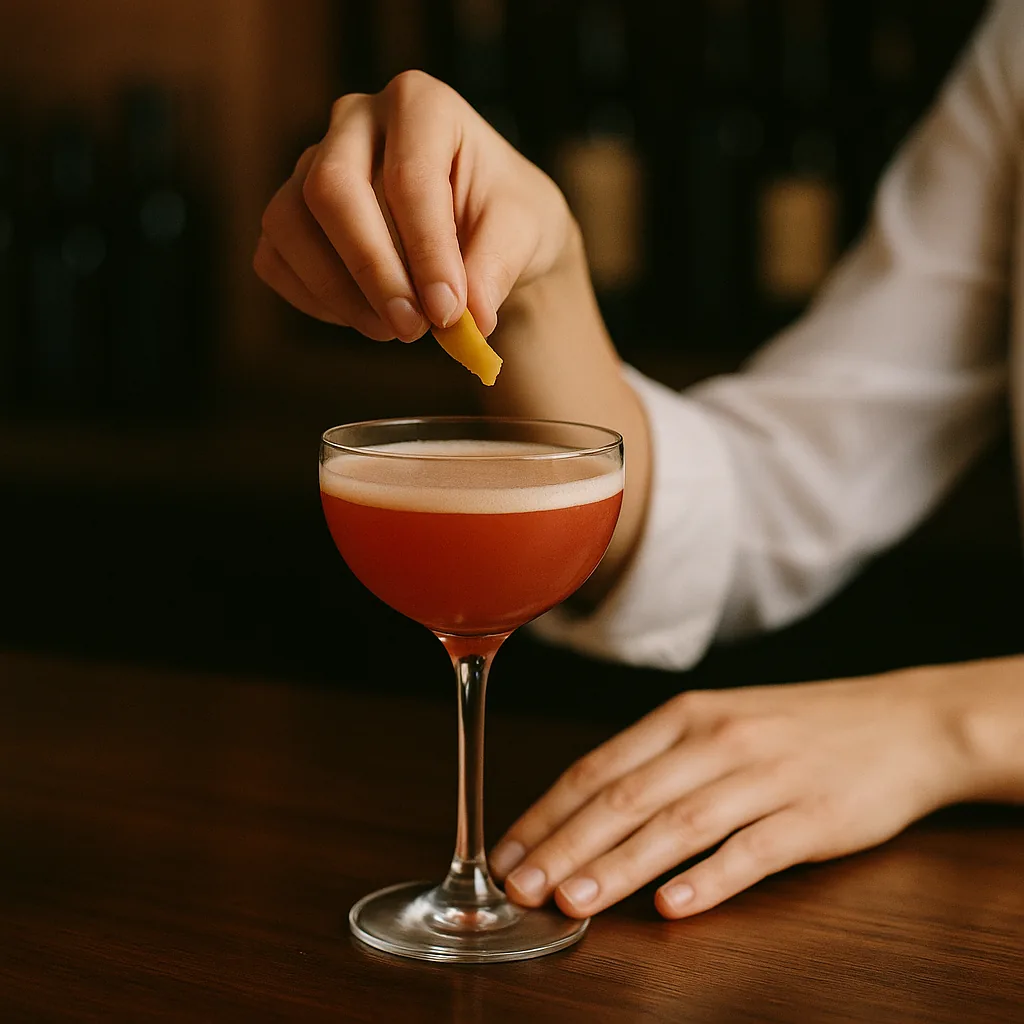
Lemon zest to finish. The orange only turns up later, in Florence.
From the collection — 8 bottles
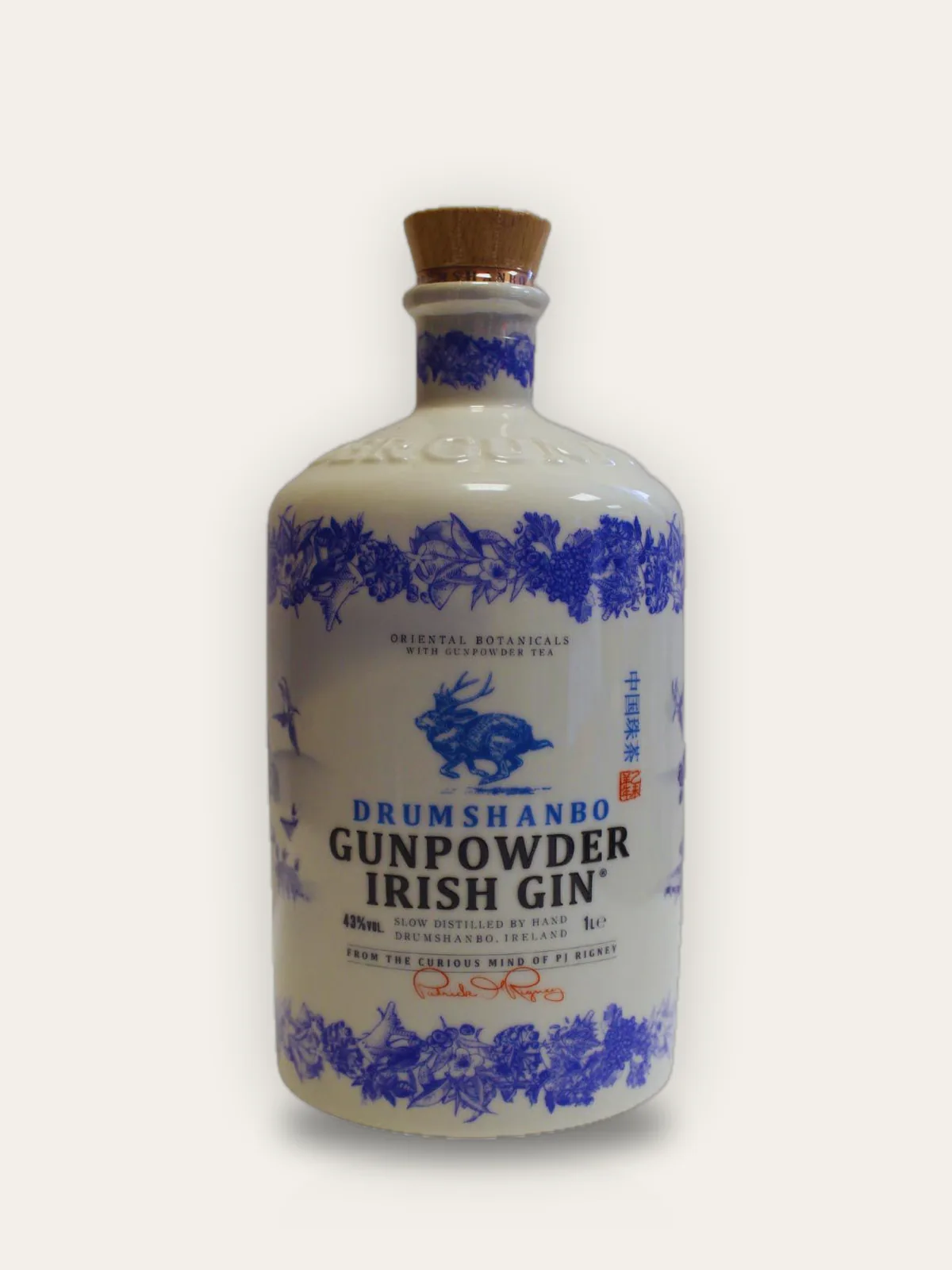
Drumshanbo
Gunpowder Irish Gin (ceramic 1L)
The gunpowder tea tannin in this Drumshanbo bottling meets Campari's bitterness head-on, and 43% keeps the gin audible under the vermouth.
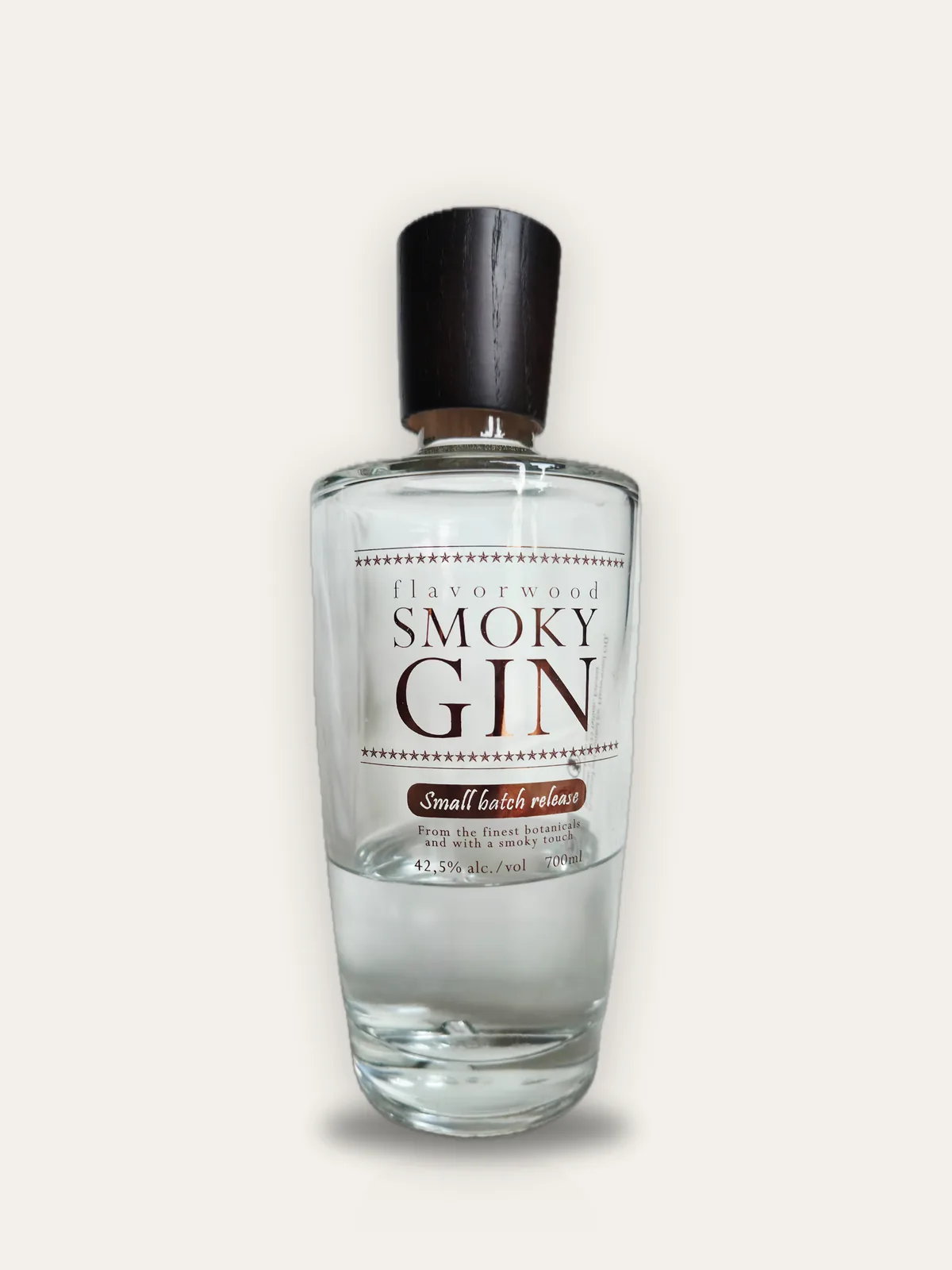
Flavorwood
Smoky Gin
The smoky wood note stands up to Campari's bitterness where a softer floral gin would vanish under it.
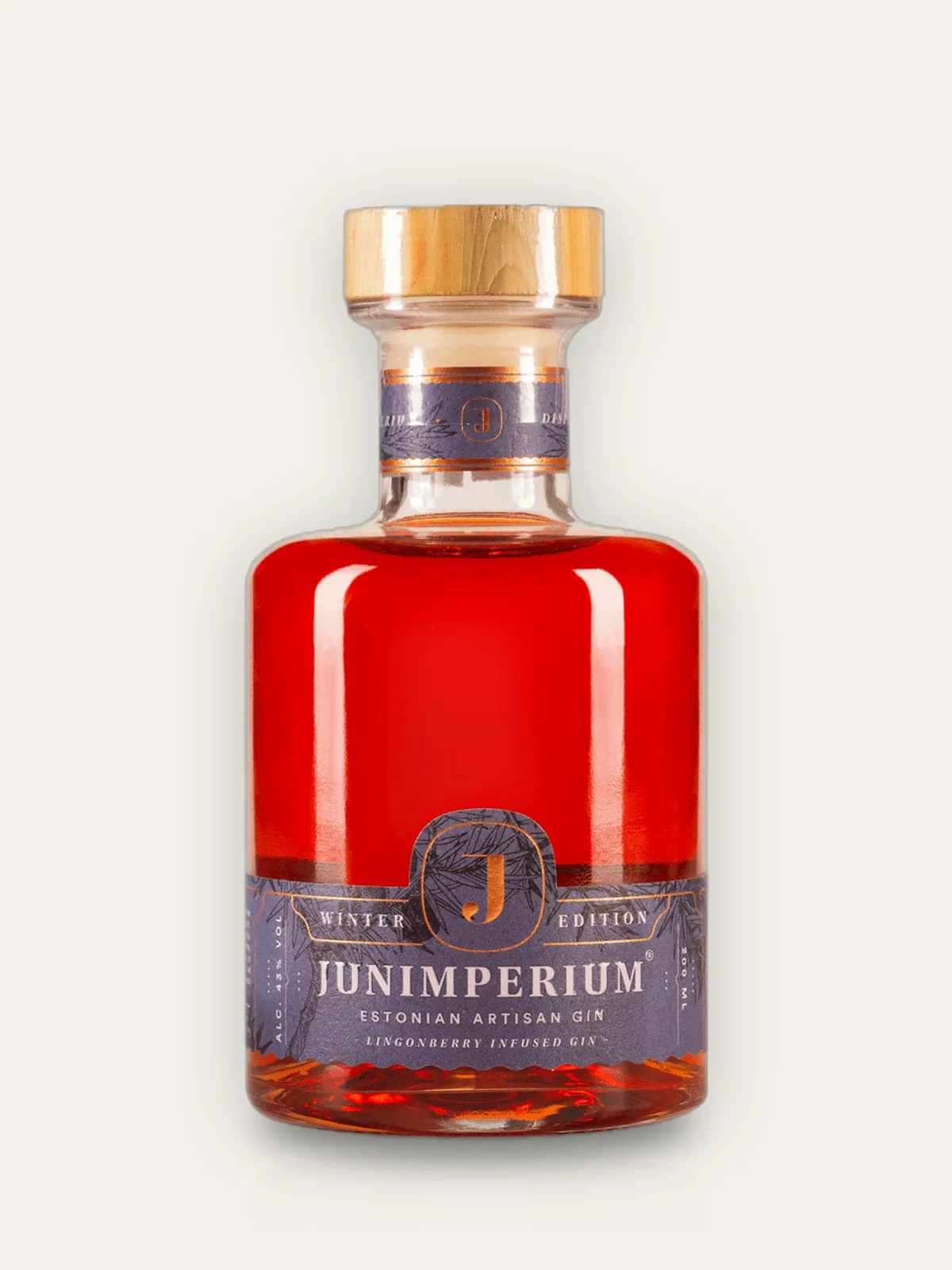
Junimperium
Winter Edition Lingonberry Infused
The tart lingonberry and bitter orange meet Campari's bitterness head-on, while cassia bark and vanilla give the vermouth something sweet to hold.
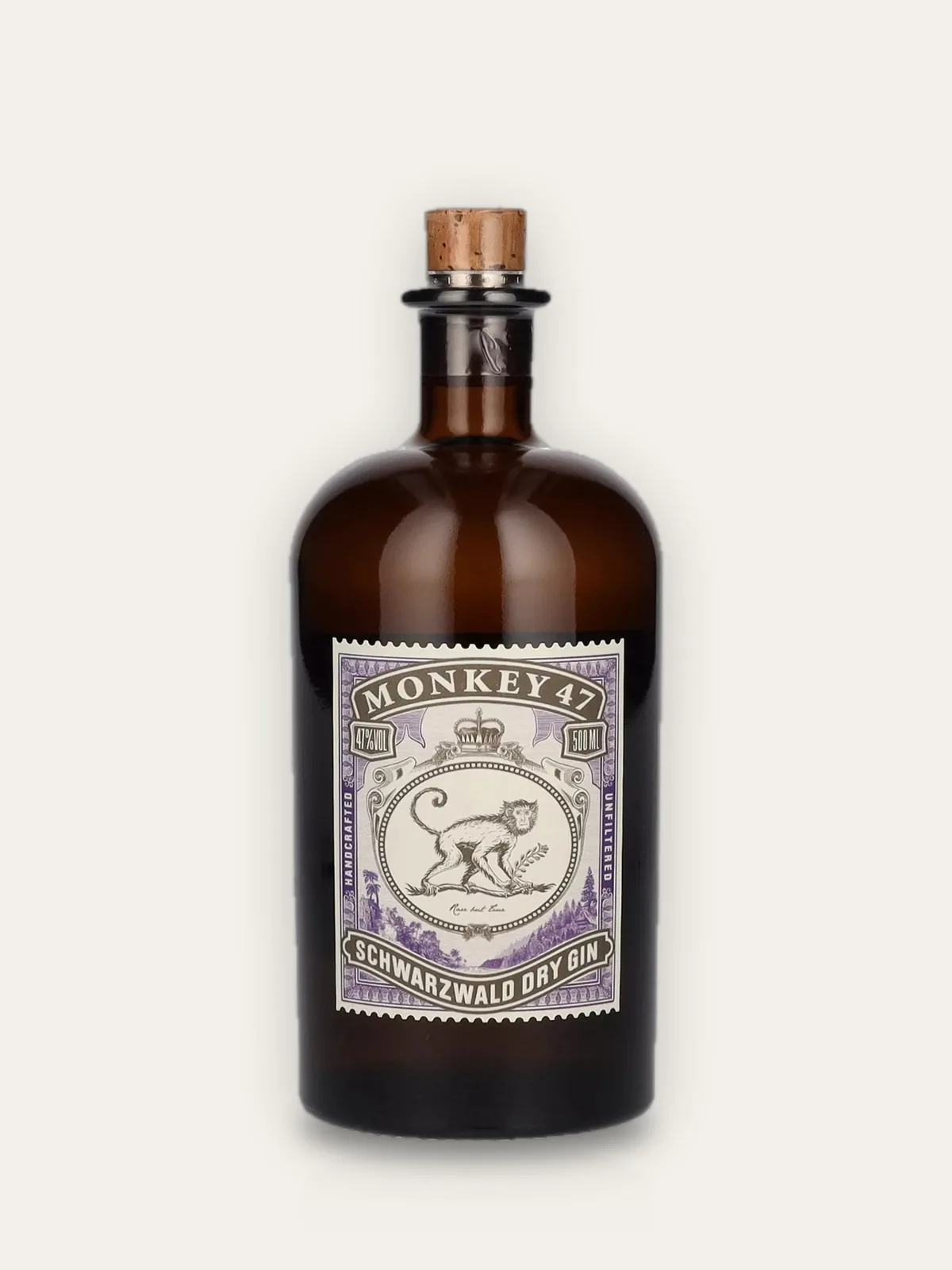
Monkey 47
Schwarzwald Dry Gin
The Schwarzwald gin's forest-pine depth and 47% backbone hold their shape against equal parts vermouth and bitter, where a 40% gin would vanish.
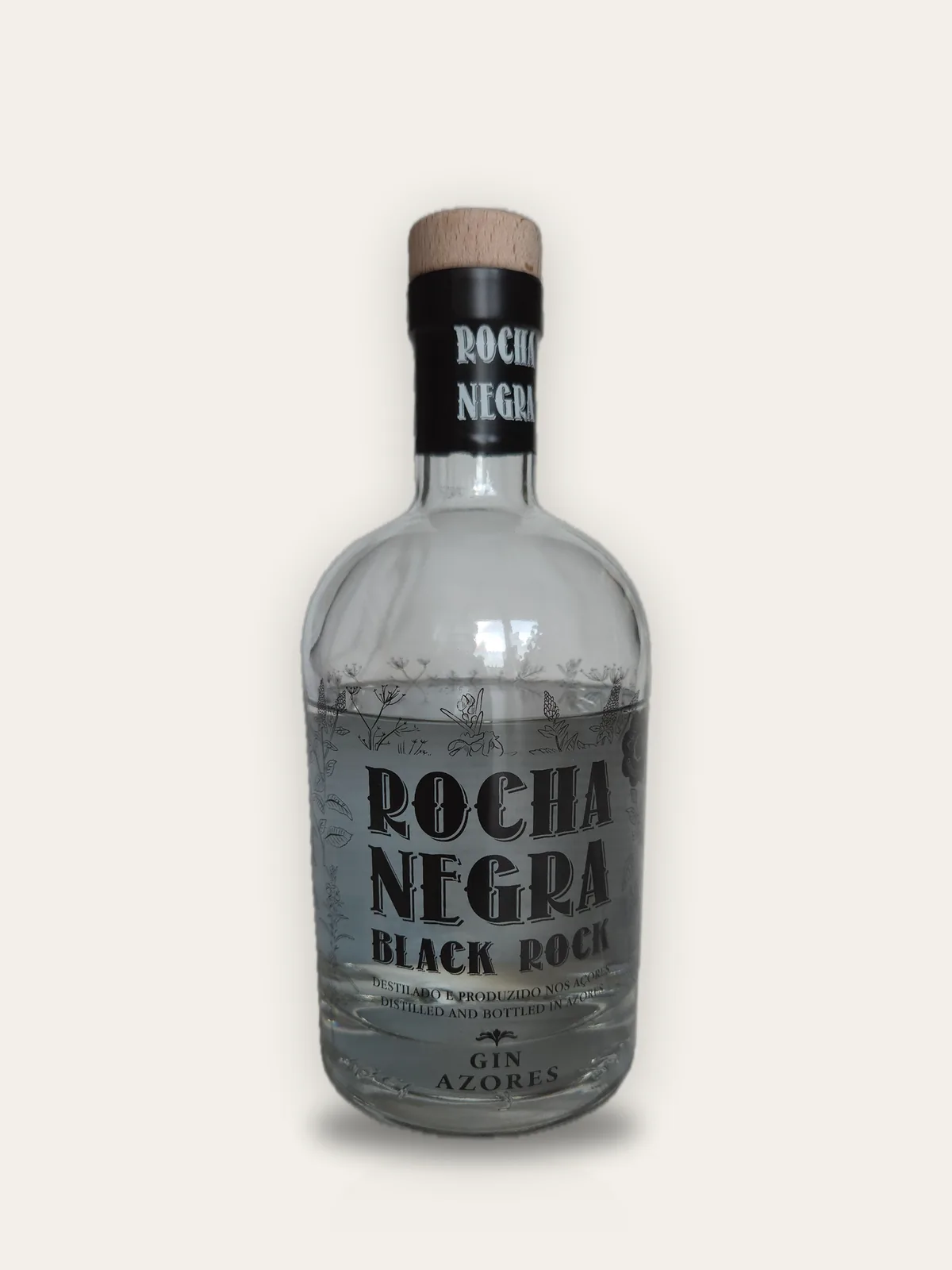
Rocha Negra
Black Rock
A gin called Black Rock is claiming a dry, stony backbone, and that is exactly what holds its own against Campari and sweet vermouth.
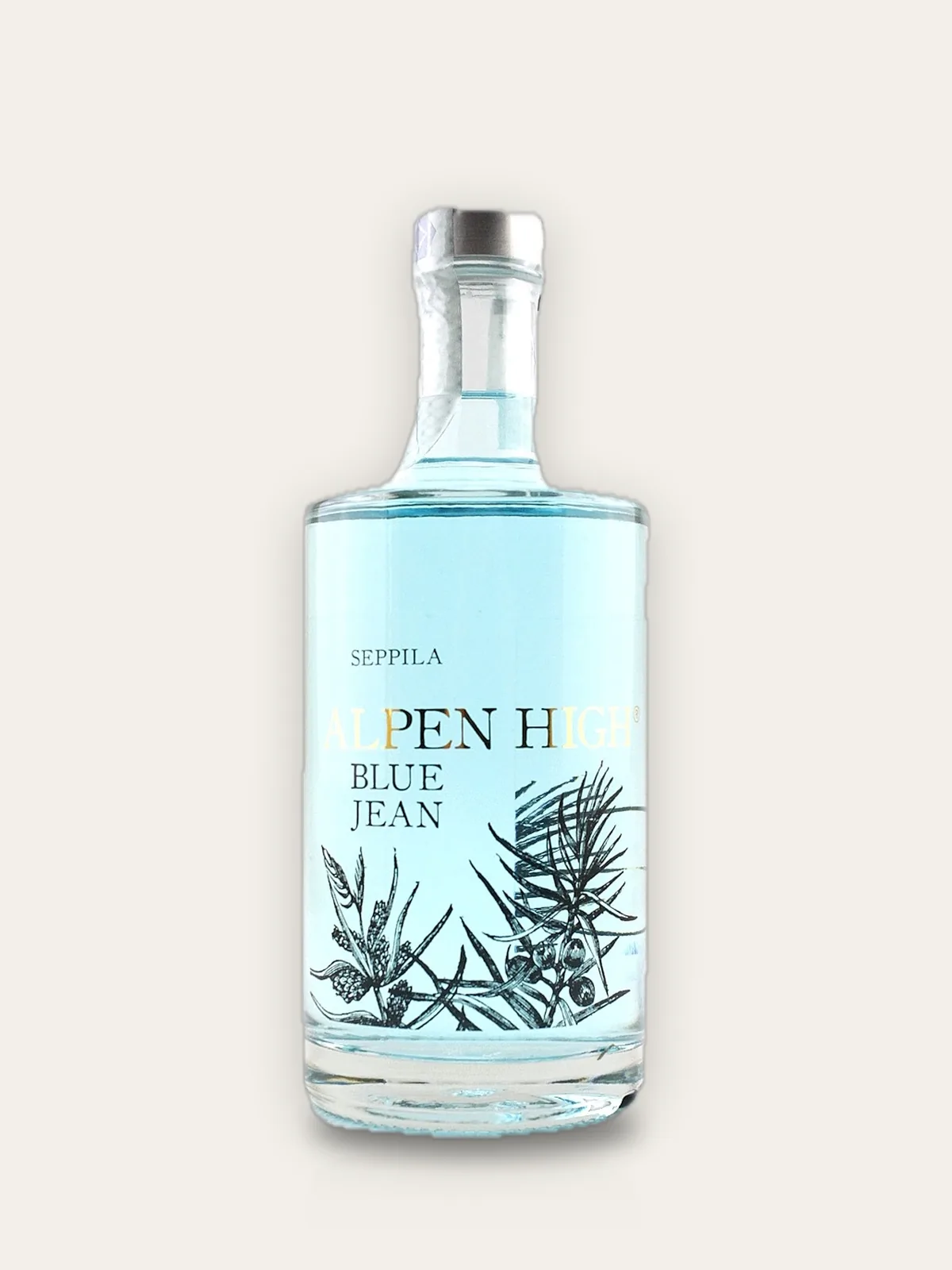
Seppila
Alpen High Blue Jean
The dry, resinous alpine juniper the Alpen High name promises has the backbone to push through Campari's bitterness instead of vanishing under it.
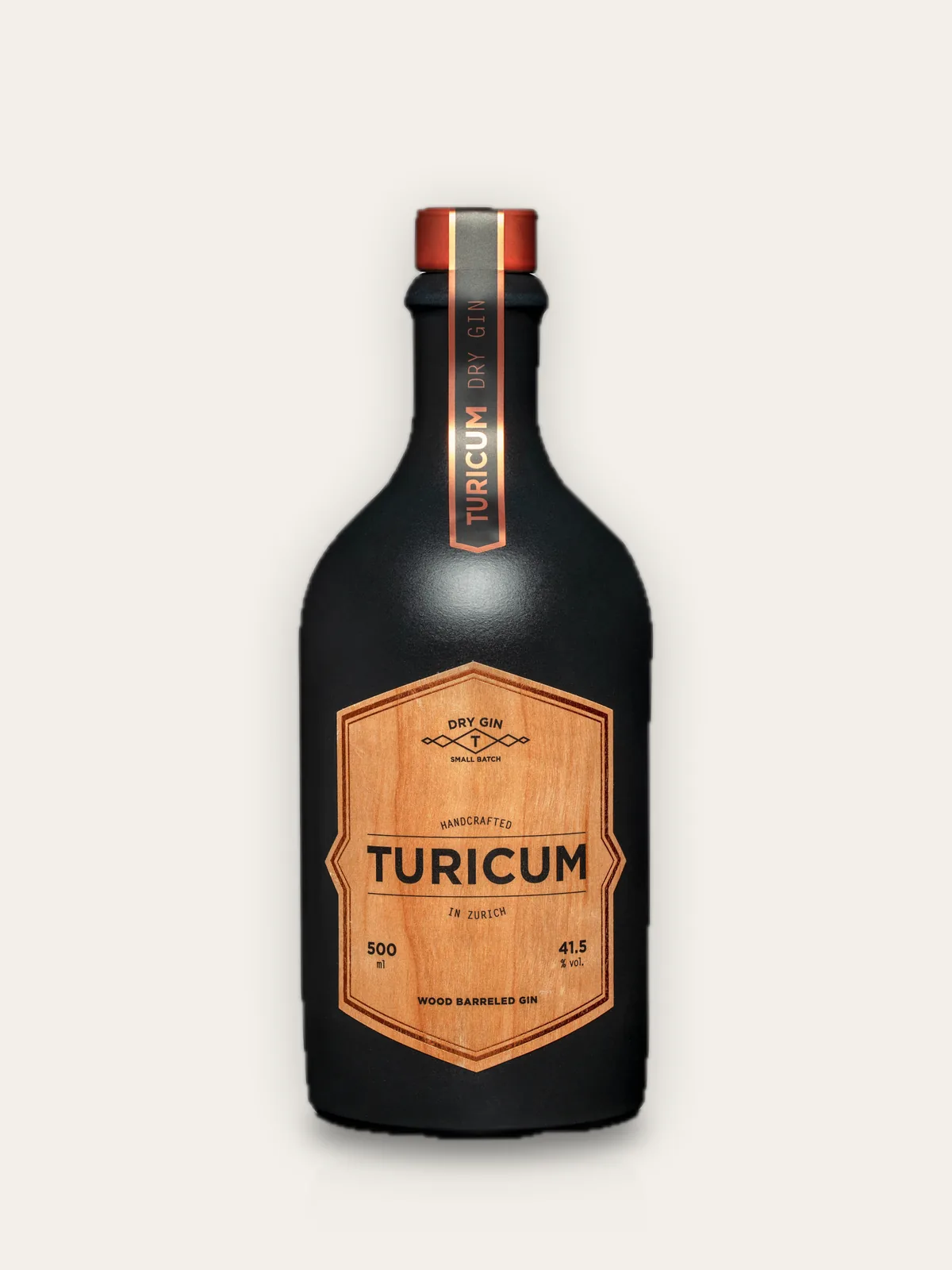
Turicum
Wood Barreled Dry Gin
The wood-aged weight of this Zurich dry gin stands up to Campari and vermouth where an unaged gin thins out, and the oak vanilla softens the bitter edge.
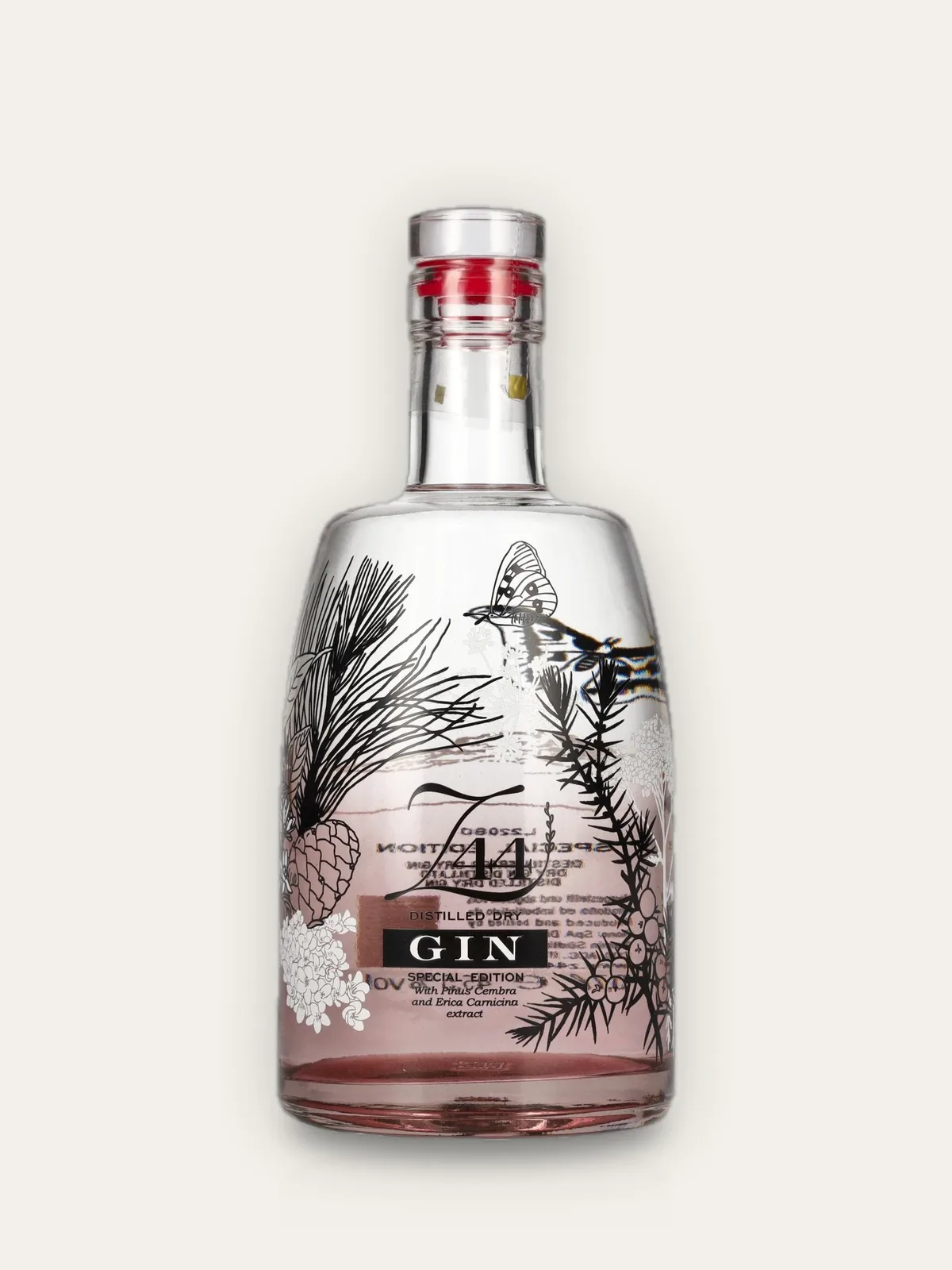
Z44
Distilled Dry Gin Special Edition
The gentian root bitterness in this South Tyrolean gin runs straight into the vermouth and bitter liqueur, and 45.5% keeps it upright through the ice.